StraitofHormuz News & Analysis
50 articles
Market Mood
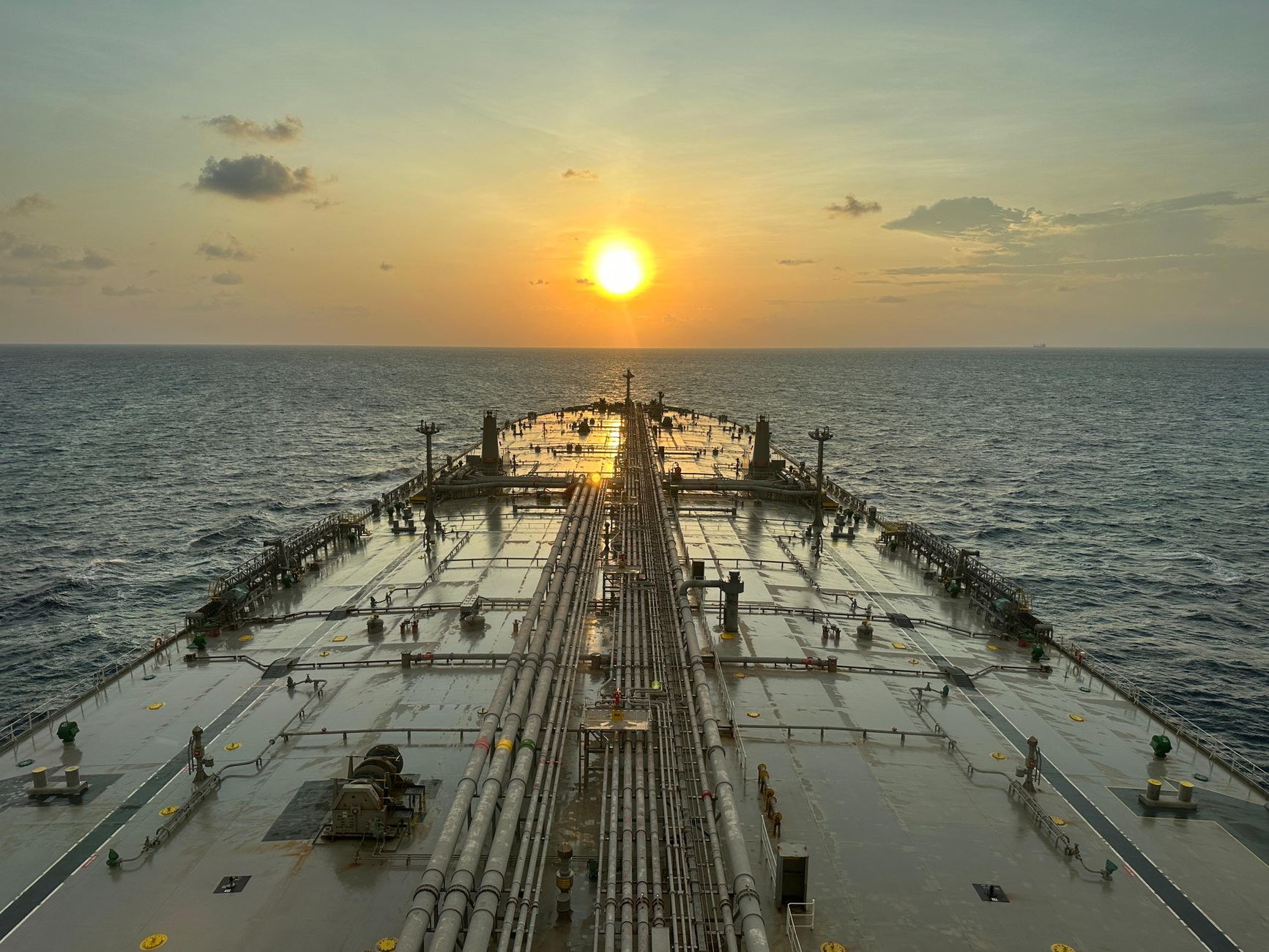
Oil Tankers Security Threats Reach Worst Levels in Years
Analysts report that the threat to oil tankers in the Middle East is currently the worst since the onset of the Iran war. Recent attacks on vessels in the Red Sea and a significant reduction in traffic through the Strait of Hormuz—down to eight ships on Sunday from over 100 daily before the conflict—underscore this risk. The Iranian-backed Houthi militia has also intensified threats, declaring a blockade on Saudi ports on July 20. This situation raises concerns about global oil flows and market stability, impacting ordinary investors as crude oil supply continues to be jeopardized.
Read More: Oil Tankers Security Threats Reach Worst Levels in Years
Trump Imposes 20% Charge on Cargo Through Hormuz Strait
President Donald Trump announced a naval blockade of Iranian ports, effective from July 14, and a 20% charge on cargo passing through the Strait of Hormuz. The U.S. aims to stop Iranian ships from using this key oil shipping route, while allowing access for other countries. This announcement follows recent military clashes between the U.S. and Iran. The impact of this blockade could affect global oil supply and maritime traffic, making it crucial for investors to monitor developments in the region.
Read More: Trump Imposes 20% Charge on Cargo Through Hormuz Strait
US Ships Charged 20% Fee for Strait of Hormuz Security
President Trump announced that the US will impose a 20% fee on ships using the Strait of Hormuz. This fee is intended to fund security measures provided by Washington for vessels in the region, reinforcing its role as the 'guardian' of the waterway. The move is significant as it could impact shipping costs and security dynamics in a strategically crucial area for global oil transport. This decision may influence investor sentiments about market stability and shipping industries that operate in this vital corridor.
Read More: US Ships Charged 20% Fee for Strait of Hormuz Security
Iran Attacks Tankers; U.S. Exports 5-8M Barrels Daily
Iran attacked three tankers in the Strait of Hormuz, aiming to exert control over this critical shipping route. U.S. officials indicated that military escorts have facilitated the exit of 5 to 8 million barrels of oil per day. This event marks a significant escalation in regional tensions and the U.S. Energy Secretary stated Iran's ability to close the strait is diminishing. Stability in Hormuz is crucial as it impacts oil exports for Gulf states, which could affect global oil prices.
Read More: Iran Attacks Tankers; U.S. Exports 5-8M Barrels Daily
U.S. Revokes Iranian Oil Sales Authorization After Tanker Attacks
The U.S. Treasury Department revoked its authorization for Iranian oil sales following a series of attacks on commercial tankers in the Strait of Hormuz. The Joint Maritime Operations Center raised its threat assessment to 'severe' due to attacks on various tankers, including a liquefied natural gas tanker. Previously, a license issued by the Trump administration allowed Iranian oil sales until August 21. This decision impacts global oil supply dynamics, which may affect prices and ordinary investors' portfolios.
Read More: U.S. Revokes Iranian Oil Sales Authorization After Tanker Attacks
Strait of Malacca Could Face Tolls Amid Iran's Proposal
Concerns are rising among energy market participants about potential tolls on the Strait of Malacca due to Iran's proposal to jointly administer the Strait of Hormuz with Oman. The Strait of Hormuz currently handles around 20% of global oil traffic, while the Strait of Malacca accounted for 29% of total maritime oil flows in the first half of 2025. The situation could impact oil prices if tolling becomes standard in critical maritime corridors. The introduction of fees in these areas would likely concern investors looking at future oil supply and costs.
Read More: Strait of Malacca Could Face Tolls Amid Iran's Proposal
Oman, UK, France Ensure Safety of Gulf Territorial Waters in 2026
Oman has agreed to coordinate with the U.K. and France to ensure the safety of its territorial waters, particularly for navigation through the Strait of Hormuz. This follows an increase in oil shipments after a recent U.S.-Iran agreement aimed at reopening this vital sea lane. The U.K. and France plan to deploy military resources, including mine-hunting ships and frigates, to support this mission. Approximately 20% of the world's oil passes through this strait, highlighting its importance for global trade and potential market impacts.
Read More: Oman, UK, France Ensure Safety of Gulf Territorial Waters in 2026
France and Oman Mine Clearing Project in Strait of Hormuz
France and Oman have announced a collaborative effort to clear mines from the Strait of Hormuz. This initiative is significant due to the strategic importance of this waterway for international oil transport. The response to any disruptions can affect global oil prices and trade routes. The partnership aims to enhance maritime security in the region and potentially stabilize market conditions related to energy supply.
Read More: France and Oman Mine Clearing Project in Strait of Hormuz
Aramco (2222) Helicopter Crash Kills 14 in Ras Tanura Incident
A helicopter crash at Ras Tanura, a Saudi Arabian port, has resulted in at least 14 fatalities. This incident occurred hours after strikes between the US and Iran raised concerns about a fragile deal to reopen the Strait of Hormuz. The situation could impact oil supply routes, potentially affecting global oil prices and market stability. Aramco (2222) is the state-owned oil company in Saudi Arabia, and incidents like these could influence investor confidence.
Read More: Aramco (2222) Helicopter Crash Kills 14 in Ras Tanura Incident
NYK Shipping Traffic Cut to Half Prewar Levels Amid Restrictions
Takaya Soga, CEO of NYK, has stated that safe shipping routes through the Strait of Hormuz are now 'extremely limited', leading to traffic levels dropping to 50% of prewar figures. This significant reduction in shipping traffic could impact global shipping rates and supply chains. The restrictions are expected to last for months, affecting both cargo availability and maritime shipping logistics. Investors and stakeholders should consider potential implications on markets reliant on this critical shipping lane.
Read More: NYK Shipping Traffic Cut to Half Prewar Levels Amid Restrictions
Oil Prices Face Volatility After Strait of Hormuz Shipping Warnings
Oil markets are entering another week of losses amidst warnings from Iran regarding shipping routes in the Strait of Hormuz. The Iranian government stated that vessels not following approved routes would face consequences. Additionally, a U.N. organization has paused its ship-evacuation efforts in the area, which could impact supply dynamics. These developments may lead to increased price volatility in the oil market, highlighting the geopolitical risks associated with this vital shipping lane.
Read More: Oil Prices Face Volatility After Strait of Hormuz Shipping Warnings
Iran's Toll-Free Assurance for Strait of Hormuz from Trump
President Donald Trump announced that Iran assured the U.S. there will be no tolls or charges for ships passing through the Strait of Hormuz. This statement follows a recently signed interim peace deal which aims to end hostilities and includes a provision to keep the Strait toll-free for at least 60 days. Trump also mentioned that no money has been released to Iran by the U.S. while expressing plans to assist with food purchases for Iran exclusively from U.S. producers. The situation is significant for market stability given the Strait's importance for global oil transportation.
Read More: Iran's Toll-Free Assurance for Strait of Hormuz from Trump
Evacuation of 11,000 Seafarers Begins in Strait of Hormuz
More than 11,000 seafarers will begin evacuation from the Persian Gulf through the Strait of Hormuz as part of a large-scale plan supported by Iran and the United States. This initiative was announced by the International Maritime Organization, ensuring all necessary safety guarantees have been secured. The operation follows a memorandum of understanding signed recently, which has contributed to a tripling of ship transits to 93 vessels over the June 19 to 21 weekend compared to the previous two-week period. Hormuz remains critical as it facilitates approximately 20% of global oil supplies.
Read More: Evacuation of 11,000 Seafarers Begins in Strait of Hormuz
Trump Threatens Iran with Increased Sanctions Over Strait Closure
President Donald Trump warned of increased military action against Iran following its announcement to close the Strait of Hormuz. This development came during high-level talks in Switzerland aimed at a peace deal, initiated a week prior. Shipping data revealed only one small tanker crossed the strait post-announcement, indicating a significant drop from recent pre-war levels. The closure of the strait has caused major global energy supply disruptions, and discussions regarding Iran's nuclear program remain stalled until hostilities in Lebanon cease. The situation may impact energy markets significantly.
Read More: Trump Threatens Iran with Increased Sanctions Over Strait Closure
Iran Implements Insurance Fees for Strait of Hormuz Passage
The Iranian government has mandated that vessels passing through the Strait of Hormuz must obtain an insurance policy approved by Tehran. This policy is seen as a measure to secure revenue through 'insurance fees' and to regulate maritime activity in the strategically important waterway. The Strait of Hormuz is crucial for global oil supply, making this development significant for international trade and oil markets. Further details on the specific fee amounts or the enforcement timeline were not provided.
Read More: Iran Implements Insurance Fees for Strait of Hormuz Passage
U.S.-Iran Deal Allows Oil Transit in Strait of Hormuz for 60 Days
The U.S. and Iran signed a memorandum allowing oil tankers to transit the Strait of Hormuz toll-free for 60 days. As of Thursday, three supertankers from Saudi Arabia carrying 6 million barrels of oil have crossed this critical waterway. Following the agreement, the U.S. Navy has ceased its blockade of Iranian ports. U.S. officials state that any economic relief for Iran is conditioned on the country fulfilling its commitments outlined in the deal.
Read More: U.S.-Iran Deal Allows Oil Transit in Strait of Hormuz for 60 Days
Three Iranian Tankers Exit U.S. Blockade, 5 Million Barrels Released
Three Iranian tankers carrying approximately 5 million barrels of crude oil have successfully exited the U.S. Navy blockade in the Strait of Hormuz, marking the first outbound shipment in two months. This event follows a memorandum between the U.S. and Iran signifying a potential deal that may lift sanctions on Iranian oil sales. Among the departing vessels, two supertankers, Diona and Hero 2, transported a combined total of 3.8 million barrels. The situation has encouraged some shipowners to reposition vessels, but uncertainties remain regarding the stability of the region and ongoing high war-risk insurance premiums.
Read More: Three Iranian Tankers Exit U.S. Blockade, 5 Million Barrels Released
U.S.-Iran Deal: Memorandum of Understanding Announced Today
A preliminary U.S.-Iran agreement has been reached, aiming to end their ongoing conflict, which has impacted the global economy for nearly four months. Stocks increased on Monday, while oil prices and bond yields decreased. A 'memorandum of understanding' is set to be signed on Friday in Geneva, and both countries indicated plans to reopen the Strait of Hormuz. However, negotiations regarding a permanent resolution to issues, including Iran's nuclear program, are expected to follow over the next 60 days, pending the release of frozen Iranian funds.
Read More: U.S.-Iran Deal: Memorandum of Understanding Announced Today
U.S.-Iran Deal Ends War, Sanctions Relief and Strait of Hormuz Reopening
The U.S. and Iran reached an agreement to end their conflict after three months, with a signing set for Friday. An Iranian state media report mentioned a 14-page draft memorandum which includes the U.S. lifting oil sanctions and Iran reopening the Strait of Hormuz within 30 days. European nations indicated their willingness to ease sanctions on Iran contingent upon verifiable steps regarding its nuclear program. This agreement aims to enhance regional stability and could significantly affect global oil markets and economic conditions.
Read More: U.S.-Iran Deal Ends War, Sanctions Relief and Strait of Hormuz Reopening
US-Iran Peace Deal Reopens Strait of Hormuz for Trade Access
The US and Iran have reached a peace deal that aims to reopen the Strait of Hormuz, a critical waterway for global oil transportation. This development could significantly impact oil prices and global supply chains, as the strait is vital for approximately 20% of the world's oil trade. The reopening may lead to increased market stability in oil prices if tensions decrease. Detailed figures regarding the agreement's specific implications for oil production or pricing were not disclosed.
Read More: US-Iran Peace Deal Reopens Strait of Hormuz for Trade Access
Iran (IRN) and US Reach Agreement on Strait of Hormuz
Iran and the United States reached a deal to reopen the Strait of Hormuz and end the US naval blockade of Iranian ports. The signing of this agreement is scheduled for Friday, which could significantly impact oil trade and regional stability. The Strait of Hormuz is a critical passage for approximately 20% of the world's oil supply, and its reopening may lead to changes in shipping costs and volumes. The agreement matters for markets as it may influence oil prices and geopolitical relations in the region.
Read More: Iran (IRN) and US Reach Agreement on Strait of Hormuz
Trump Comments on Iran and Strait of Hormuz Reopening Agreement
US President Donald Trump recently addressed the situation concerning Iran and the potential reopening of the Strait of Hormuz. His comments follow leaks from Iranian media revealing details of a possible agreement. The Strait of Hormuz is a critical chokepoint for global oil shipments, and any changes could significantly affect oil prices. However, specific numbers or details related to stock movements or economic data were not provided.
Read More: Trump Comments on Iran and Strait of Hormuz Reopening Agreement
Trump says Iran war settlement expected soon amid oil shipping routes
President Donald Trump announced progress toward a settlement of the war with Iran, expecting a signing in the next few days. He stated that the Strait of Hormuz, a crucial oil shipping route, will reopen once the deal is finalized. However, Iranian state media reported no approval of the proposed agreement from Tehran, indicating that the U.S. may have reverted to its previous demands. Following Trump's announcement, U.S. stock indexes rose, and oil prices fell, consistent with past market reactions to his claims regarding a potential deal.
Read More: Trump says Iran war settlement expected soon amid oil shipping routes
Military Confirms No US Warships Struck in Strait of Hormuz
The US military has confirmed that none of its warships were struck in the Strait of Hormuz. This statement comes amid heightened tensions that could impact oil supply routes. The Strait is a crucial passage for global oil shipments, and any military action in the region could have significant market repercussions. The situation remains closely monitored for potential developments that could affect energy markets and related sectors.
Read More: Military Confirms No US Warships Struck in Strait of Hormuz
Iran's Strait of Hormuz Closure Impact on Market Stability
Tehran has announced the closure of the Strait of Hormuz indefinitely in response to recent U.S. military operations. This strategic waterway is pivotal, with around 20% of the world's oil passing through it. The closure could potentially lead to significant disruptions in oil supply, which may impact prices in markets globally. Traders should monitor developments closely for fluctuations in oil prices and related equities.
Read More: Iran's Strait of Hormuz Closure Impact on Market Stability
U.S. Military Strikes Iran Following Apache Helicopter Incident
U.S. Central Command (CENTCOM) launched retaliatory strikes against Iran in response to the downing of a U.S. Army Apache helicopter on May 24, 2026. The military actions targeted Iranian air defense and surveillance sites near the Strait of Hormuz, with CENTCOM confirming the completion of these strikes. President Donald Trump stated that the pilots of the downed helicopter are safe, and emphasized the necessity of the U.S. response. This escalation could hinder ongoing diplomatic efforts to secure a deal regarding Iran's nuclear capabilities, which Trump previously indicated might be finalized soon.
Read More: U.S. Military Strikes Iran Following Apache Helicopter Incident
Strait of Hormuz Traffic Likely Disrupted Until January 2027
Traders predict a 66% chance that shipping traffic in the Strait of Hormuz will not normalize before January 2027. The odds of resuming normal flow before August have decreased sharply from 66% to 21% in the past two weeks. Normal traffic is defined as a seven-day moving average of over 60 ships passing through. This instability is influenced by recent conflicts between Iran and Israel, affecting regional shipping dynamics.
Read More: Strait of Hormuz Traffic Likely Disrupted Until January 2027
Ships Sailing Dark in Strait of Hormuz Impact Trade Dynamics
Vessels are reportedly utilizing dark mode operations to navigate the Strait of Hormuz, a significant corridor for oil shipments. This tactic raises concerns regarding the potential impact on oil supply and pricing in global markets. The Strait of Hormuz sees roughly 20% of the world's crude oil pass through, highlighting its critical role in energy trade. Such movements can lead to increased volatility in oil prices and may affect major oil companies like ExxonMobil (XOM) and Chevron (CVX).
Read More: Ships Sailing Dark in Strait of Hormuz Impact Trade Dynamics
Trump's Threats Against Oman Spark Geopolitical Tensions in 2026
The Trump administration has threatened Oman with sanctions if it assists Iran in establishing a tolling system in the Strait of Hormuz, which handles approximately 20% of global oil traffic. Treasury Secretary Scott Bessent stated that the U.S. would aggressively target any actors involved in this effort. In remarks during a cabinet meeting, President Trump threatened military action against Oman, saying they must comply or face dire consequences. These developments mark a significant shift in U.S. posture towards Oman, a historically stable ally in the region.
Read More: Trump's Threats Against Oman Spark Geopolitical Tensions in 2026
U.S. Sanctions Iran's Persian Gulf Strait Authority Over Tolls
The U.S. Treasury sanctioned Iran's Persian Gulf Strait Authority, which was established recently to control transit through the Strait of Hormuz. Treasury Secretary Scott Bessent warned Oman against allowing tolls for vessels passing through this key oil route, stating that those involved would face consequences. The sanctions are part of 'Operation Economic Fury,' aimed at limiting Iran's financial capabilities. Tensions in the region are rising, as Iran has also launched missiles towards Kuwait and attacked drones around the strait, despite ongoing negotiations between the U.S. and Iran for a ceasefire.
Read More: U.S. Sanctions Iran's Persian Gulf Strait Authority Over Tolls
Iran (IRAN) Moving Toward Peace Deal Over Strait of Hormuz
General David Petraeus stated that Iran may be 'blinking' regarding negotiations over the Strait of Hormuz, potentially allowing its reopening without conditions. President Donald Trump reported that peace talks are ongoing, though a key issue remains Iran's enriched uranium stockpile. The U.S. Secretary of State Marco Rubio indicated a possible deal could occur soon. Petraeus warned that if Iran gains control over the Strait, it might threaten commercial shipping despite its military weaknesses. Outcomes from these talks could significantly affect shipping routes and regional stability for markets.
Read More: Iran (IRAN) Moving Toward Peace Deal Over Strait of Hormuz
Crude Oil Drops Amid US Iran Deal Progress
Crude oil prices have decreased as the US government reportedly moves closer to a deal with Iran that may lead to the reopening of the Strait of Hormuz. This strategic waterway is crucial for global oil supply, accounting for approximately 20% of the world's oil production. The anticipated reopening could increase supply and pressure oil prices downward. Monitoring these developments is significant for traders in the energy markets, particularly for companies involved in crude oil, such as ExxonMobil (XOM).
Read More: Crude Oil Drops Amid US Iran Deal Progress
Oil Prices Drop as U.S. Iran Deal Negotiations Progress
Reports indicate that the U.S. is close to finalizing an agreement to end the conflict with Iran, which could lead to the reopening of the Strait of Hormuz. This potential agreement has contributed to a sharp decrease in oil prices. The reopening of this critical maritime route is significant for oil supply and global markets. The exact impact on oil price metrics has not been quantified in the article, but it highlights major geopolitical developments affecting oil (CL=F).
Read More: Oil Prices Drop as U.S. Iran Deal Negotiations Progress
Oil Flow Anticipation in Gulf After Strait of Hormuz Reopening Plans
The Energy Secretary stated that the Strait of Hormuz is expected to reopen 'sometime this summer at latest,' which is significant for oil trading in the region. Ships are reported to be getting in position for oil to start flowing again. This reopening could potentially impact oil prices and trading volumes significantly, reflecting changes in supply dynamics. The sentiment around oil companies may shift positively if these plans are realized, boosting market confidence in sectors reliant on Gulf oil exports.
Read More: Oil Flow Anticipation in Gulf After Strait of Hormuz Reopening Plans
U.S. Iran Talks Progress but Uranium Dispute Continues
The U.S. and Iran are indicating progress in negotiations to end their conflict, as U.S. Secretary of State Marco Rubio stated there are 'good signs' for an agreement. However, tensions remain high over Iran's enriched uranium stockpile and proposed tolls for shipping through the Strait of Hormuz, a critical oil passage through which approximately 20% of the world's oil and liquefied natural gas typically flows. The U.S. has communicated that the president has options if a satisfactory deal cannot be reached. Both sides are currently engaged in a review of proposals aimed at reducing hostilities.
Read More: U.S. Iran Talks Progress but Uranium Dispute Continues
Iran Seizes Vessel Near Strait of Hormuz: Implications for Oil Market
Iran has seized a vessel owned by a Chinese security firm near the Strait of Hormuz. This incident raises concerns about maritime security in a vital oil shipping route. The Strait of Hormuz is crucial as it transports approximately 20% of the world's oil. The ongoing tensions may lead to market volatility, potentially impacting oil prices and related sectors.
Read More: Iran Seizes Vessel Near Strait of Hormuz: Implications for Oil Market
Iran to Collect Tolls on Strait of Hormuz Traffic Plans
Iran announced plans to collect tolls for vessels using the Strait of Hormuz, a crucial maritime route in global oil transportation. This move is significant as the Strait accounts for about 20% of the world's oil supply, and any disruptions could impact global oil prices. The announcement indicates a shift in Iran's approach to maritime traffic management and revenue generation. Monitoring this development will be vital for oil markets and related sectors, as it may influence shipping costs and regional geopolitical dynamics.
Read More: Iran to Collect Tolls on Strait of Hormuz Traffic Plans
US Diplomat Discusses Iran and Strait of Hormuz Impact
The US Secretary of State held discussions with officials from the UK and Australia regarding Iran and the Strait of Hormuz. This conversation addressed strategic security concerns in the region, particularly the implications for oil transport through this vital waterway. While specific economic data was not disclosed, the security of the Strait of Hormuz is crucial, as it is a major route for global oil shipments. The talks underscore the geopolitical tensions entangled with energy markets and highlight the collaborative effort among allied nations to ensure stability.
Read More: US Diplomat Discusses Iran and Strait of Hormuz Impact
Qatar (QATAR) Sends First LNG Shipment Through Strait of Hormuz
Qatar has sent its first liquefied natural gas (LNG) shipment via the Strait of Hormuz since the start of the recent conflict. This event is significant as the Strait is a key passageway for global energy supplies, impacting gas pricing and availability in the markets. The specific volume of the LNG shipment and its destination were not disclosed, but the resumption of exports could stabilize gas prices. Investors should monitor this development closely as it may influence energy sector dynamics.
Read More: Qatar (QATAR) Sends First LNG Shipment Through Strait of Hormuz
Strait of Hormuz Tensions Rise Amid U.S.-Iran Fire Exchange
The U.S. and Iran engaged in an exchange of fire in the Strait of Hormuz, with both nations asserting that the other initiated the conflict. U.S. Central Command (CENTCOM) reported that its forces intercepted unprovoked Iranian attacks, with no U.S. assets struck. CENTCOM targeted Iranian military facilities, including missile and drone launch sites, in response to the attacks. This flare-up complicates the ongoing ceasefire that had been in effect since April 8, 2023, as both sides accuse each other of violating its terms, impacting regional stability and oil shipping routes.
Read More: Strait of Hormuz Tensions Rise Amid U.S.-Iran Fire Exchange
Trump's Shipping Strategy Could Ease 50% Crude Price Surge
The U.S. aims to facilitate the movement of hundreds of oil tankers trapped in the Strait of Hormuz. Currently, global crude prices have surged by over 50% due to this stagnation. Successfully navigating these vessels out would alleviate market pressures and could stabilize oil prices. This maneuver may influence trading volumes and pricing in the oil market significantly.
Read More: Trump's Shipping Strategy Could Ease 50% Crude Price Surge
Chevron (CVX) CEO Highlights Concerns Over Strait of Hormuz Safety
Chevron's (CVX) CEO raised concerns regarding the safety of shipping routes through the Strait of Hormuz. This strategic waterway is crucial for global oil shipments, impacting the supply chain. Any disruption in this region could lead to significant price fluctuations in oil markets. Ensuring safety in the Strait of Hormuz is essential, as it handles a substantial percentage of the world's oil transport.
Read More: Chevron (CVX) CEO Highlights Concerns Over Strait of Hormuz Safety
US to Use 15,000 Troops in Project Freedom for Strait of Hormuz
The United States will begin an operation on Monday, named 'Project Freedom,' to free merchant ships stranded in the Strait of Hormuz. The initiative involves approximately 15,000 US service personnel, guided-missile destroyers, and over 100 aircraft, as announced by US Central Command (Centcom). The ongoing closure by Iran has resulted in an increase in global fuel prices and left around 20,000 sailors stranded. The operation comes amid a temporary ceasefire between the US and Iran, aiming to facilitate freedom for international shipping in a critical oil transit route, accounting for 20% of the world's oil and liquefied natural gas.
Read More: US to Use 15,000 Troops in Project Freedom for Strait of Hormuz
Oil Prices Decline as US Plans Help for Ships in Hormuz Straits
Oil prices have experienced a decrease following former President Donald Trump's announcement that the US will assist in freeing ships stranded in the Strait of Hormuz. This announcement comes amid ongoing tensions affecting global oil supply routes, which may impact oil prices further. The statement adds to the uncertainty in the oil market, as traders assess the geopolitical risks associated with shipping in this critical region. Such developments may influence trading volumes and oil market performance going forward.
Read More: Oil Prices Decline as US Plans Help for Ships in Hormuz Straits
US to Aid Ships in Strait of Hormuz with Operation Details
Former President Donald Trump stated that the U.S. will implement an operation to assist vessels in the Strait of Hormuz, although specific numbers or operational details were not disclosed. This move comes amid heightened tensions in a critical shipping region. The Strait is vital for oil transportation, and any disruption can impact global oil prices and market stability. As of now, there are no specific figures related to the operational timeline or expected outcomes for the involved assets.
Read More: US to Aid Ships in Strait of Hormuz with Operation Details
Dollar Rises Amid Trump Skepticism on Iran Strait Proposal
The US dollar strengthened following comments from former President Trump regarding skepticism about Iran's proposal to reopen the Strait of Hormuz. This news comes amidst ongoing geopolitical tensions which can impact global oil supply and pricing. While no specific figures are provided on the dollar’s movement, such skepticism generally influences investor sentiment and broader market reactions. Changes in dollar strength can affect commodity prices and international trade dynamics, making this an important market indicator.
Read More: Dollar Rises Amid Trump Skepticism on Iran Strait Proposal
Strait of Hormuz: Five Ships Pass in 24 Hours
In the last 24 hours, only five ships have transited through the Strait of Hormuz. This narrow passage is critical for global oil shipments, and such low traffic may indicate a potential disruption in maritime trade. The Strait typically sees higher volumes, making this reduced activity noteworthy for markets. Observers will be monitoring the situation closely for further developments that may impact oil prices and supply chains.
Read More: Strait of Hormuz: Five Ships Pass in 24 Hours
Iran Seizes Vessel in Strait of Hormuz Amid Tensions
Iran has seized a vessel in the Strait of Hormuz, marking a significant escalation in regional tensions. This action could affect global oil supply routes and impact traders in the energy markets. The event highlights ongoing geopolitical risks that could lead to volatility in oil prices. Analysts are monitoring the situation closely, as it has implications for major oil companies and the overall stability of the region.
Read More: Iran Seizes Vessel in Strait of Hormuz Amid Tensions
Oil Prices Rise as Strait of Hormuz Closure Impacts Markets
Limited data available — the article notes a closure in the Strait of Hormuz affecting oil supply but does not provide specific figures, trading volumes, or percentage changes. The closure of this strategic maritime route is significant as it can directly impact global oil prices and supply chains. Market participants are likely evaluating the potential influence this event could have on oil stocks and related commodities. However, without concrete statistics, the specific market impact remains uncertain.
Read More: Oil Prices Rise as Strait of Hormuz Closure Impacts Markets
Iran Maintains Control of Strait of Hormuz Amid Tensions
Iran has declared it has 'strict control' over the Strait of Hormuz, a vital waterway for global oil transport. This statement follows recent claims made by former President Donald Trump, which Tehran dismissed as false. The Strait is critical as approximately 20% of the world's oil passes through it. The situation has implications for global oil prices and shipping routes, as ongoing tensions may lead to significant market fluctuations.
Read More: Iran Maintains Control of Strait of Hormuz Amid Tensions