SPY News & Analysis
50 articles
Market Mood
Futures Little Changed after Dow Falls Over 300 Points
Stock futures were mostly unchanged on Monday night, following a session where the Dow Jones Industrial Average dropped more than 300 points. The S&P 500 declined by 0.8%, and the Nasdaq Composite fell by 0.9%. Treasury yields continued to rise, with the 10-year note yield closing above 5.2%, and the 30-year note at 5.56%. This trend signals potential challenges for investors as higher interest rates may impact equity markets moving forward.
Read More: Futures Little Changed after Dow Falls Over 300 Points
Stocks Fall as Oil Prices Rise and Treasury Yields Increase
Stocks have declined amidst rising oil prices and increasing Treasury yields. The S&P 500 index has seen a drop, contributing to overall market weakness. Higher oil prices can lead to increased costs for companies, potentially impacting earnings. Treasury yields have also risen, indicating higher borrowing costs, which could further affect company valuations. This trend might lead to cautious sentiment among investors as they assess impacts on revenue and expenses.
Read More: Stocks Fall as Oil Prices Rise and Treasury Yields Increase
Stock Futures Slip 0.2% After Winning Week on Wall Street
Stock futures fell slightly on Sunday night, with Dow Jones Industrial Average futures down 97 points (0.2%). S&P 500 and Nasdaq-100 futures also lost 0.2%. Last week, the Dow advanced 0.3%, while the S&P 500 and Nasdaq Composite increased by 1.2% and 2.1% respectively. These fluctuations follow rising oil prices, with Brent crude surpassing $105.86 per barrel. Investors should note that upcoming economic data, including the August personal consumption expenditure price index, could influence market movements.
Read More: Stock Futures Slip 0.2% After Winning Week on Wall Street
Stock Futures Slip 0.1% Ahead of Inflation and Jobs Data
U.S. stock futures are down 0.1% for both the S&P 500 and Nasdaq. This comes after a previous week of gains on Wall Street. Investors are anticipating upcoming inflation and jobs data that could influence market conditions. The slight decline indicates cautious sentiment ahead of these important economic indicators, which can affect trading volumes and market volatility. For ordinary investors, monitoring these data releases is crucial as they may impact market trends and investment strategies.
Read More: Stock Futures Slip 0.1% Ahead of Inflation and Jobs Data
Micron to Drive S&P 500 Profit Growth Significantly
Micron has become increasingly significant to the S&P 500, with its earnings report now considered a noteworthy market event. This rising importance indicates a potential shift in profit growth drivers within the index. Key details about future earnings projections or specific performance metrics were not disclosed in the article. This environment suggests that investors should monitor Micron (MU) closely, as its performance could impact broader market trends and profitability within the S&P 500.
Read More: Micron to Drive S&P 500 Profit Growth Significantly
VFV ETF for Canadian Investors: Key Insights and Performance
The article evaluates the VFV ETF, which tracks the S&P 500 index, focusing on its suitability for Canadian investors. It highlights that VFV offers low expenses and diversified exposure to U.S. companies, making it appealing for portfolio diversification. Investors considering VFV should also note its performance metrics and historical returns, although specific performance figures were not included. This information is essential for investors looking to gauge the potential benefits and risks of including VFV in their investment strategy.
Read More: VFV ETF for Canadian Investors: Key Insights and Performance
US Stocks Record Foreign Capital Inflow of $940 Billion
In the year to July, overseas purchases of US equities surpassed $940 billion. This influx of foreign capital coincided with notable gains in the S&P 500 index. This significant investment trend indicates growing confidence in the US stock market among international investors. Understanding this trend is essential for ordinary investors as it highlights the current appetite for US equities amidst fluctuating interest in debt instruments.
Read More: US Stocks Record Foreign Capital Inflow of $940 BillionDow (DJI) Futures Gain 3 Points Amid Climbing Treasury Yields
U.S. equity futures remained stable with Dow Jones Industrial Average futures gaining 3 points, or 0.01%. The S&P 500 futures were down 0.05%, while Nasdaq-100 futures slightly increased. The 10-year Treasury yield climbed to 5.225%, the highest since 2007, contributing to rising mortgage rates, which reached 7.45%. The Dow is facing a fourth consecutive weekly loss, down 0.6%, while S&P 500 is up 0.7% this week. This situation indicates potential increases in borrowing costs for consumers, impacting spending and economic growth.
Read More: Dow (DJI) Futures Gain 3 Points Amid Climbing Treasury Yields
S&P 500 Marginally Lower Amid US-Iran War Concerns
The S&P 500 ended the trading session marginally lower as investors directed their attention to the ongoing tensions stemming from the US-Iran conflict. This geopolitical situation has raised concerns among market participants about potential disruptions. While the specific percentage decline of the S&P 500 was not detailed, the focus on such international issues can create volatility in broader market trends. For ordinary investors, this highlights the importance of monitoring geopolitical events that can impact market stability and investment strategies.
Read More: S&P 500 Marginally Lower Amid US-Iran War Concerns
Everpure leads S&P 500 gainers on Thursday
Shares of data-storage company Everpure were leading the S&P 500 gainers on Thursday. This performance marks a notable achievement for the company in the market. The article highlights the growth and upward movement of Everpure compared to other stocks in the index. This is significant for investors as it indicates potential for future profitability and attractiveness of the stock in the current market landscape.
Read More: Everpure leads S&P 500 gainers on Thursday
Stock Futures Flat After Treasury Yields Surge and Fed Rate Hikes
Stock futures remained flat Wednesday night following a sell-off driven by rising Treasury yields. The 10-year Treasury note yield reached 5.135%, the highest since July 2007, while the 2-year note yield climbed to 4.947%, the highest since May 2024. Futures for the S&P 500 and Dow Jones increased slightly, while the Dow Industrials fell over 350 points, or 0.7%. Traders anticipate a 68% likelihood of the Federal Reserve raising rates in October, up from 49% a week prior, which may impact consumer borrowing costs significantly.
Read More: Stock Futures Flat After Treasury Yields Surge and Fed Rate Hikes
Bond Yields Surge Above 5% as Wall Street Fears Fed Rate Hikes
Bond yields have surpassed 5%, impacting stock performance on Wall Street. The Nasdaq and S&P 500 indices are declining, retreating from previous record levels. This sudden increase in yields suggests a shift in market sentiment regarding future Federal Reserve interest rate hikes. Higher bond yields typically lead to increased borrowing costs, which can affect corporate profits and investor preferences. Such changes in yields and rates could influence the broader market, affecting investor strategies.
Read More: Bond Yields Surge Above 5% as Wall Street Fears Fed Rate HikesS&P 500 Futures Up 0.12% as Nasdaq Hits Record High
U.S. equity futures are trading higher, with S&P 500 futures adding 0.12% and Nasdaq-100 futures up 0.14%. The Dow futures rose by 73 points, or 0.14%. The Nasdaq Composite achieved an all-time intraday high on Tuesday, closing at a record, while the S&P 500 finished slightly lower but remains 0.7% from its all-time high. Traders are also monitoring upcoming earnings reports from companies like General Mills and Paychex, which could influence market movement for investors.
Read More: S&P 500 Futures Up 0.12% as Nasdaq Hits Record High
Lockheed Martin (LMT) and RTX Drop 3% as Oil Slides on Hormuz News
Lockheed Martin (LMT) and RTX (RTX) stocks each fell 3% in morning trading following Iran's suggestion to reopen the Strait of Hormuz. This news has reduced the risk premium related to munitions demand, with LMT trading at $521.05 and RTX at $189.40. Additionally, the iShares U.S. Aerospace & Defense ETF (ITA) decreased by 1%, reflecting broader sector struggles. As the geopolitical risk diminishes, defense stocks may face ongoing pricing pressure, impacting future revenue potential.
Read More: Lockheed Martin (LMT) and RTX Drop 3% as Oil Slides on Hormuz NewsOil Sinks Below $100; Dow Futures Gain in Stock Market Updates
Dow futures experienced gains as oil prices fell below $100. Markets like the Nasdaq, Dow, and S&P 500 remained relatively unchanged, influenced by ongoing AI-related trading activity. The Nasdaq has recently hit a record closing level, driven by rising interest in AI stocks. This development in oil prices and stock performance may affect investor strategies regarding energy and technology sectors.
Read More: Oil Sinks Below $100; Dow Futures Gain in Stock Market Updates
Binance (BUSD) Acquires 1.24M Shares of Circle for $100M
Circle sold Binance 1,237,011 Class A shares at $80.84 each, raising $100 million in a private placement that closed on September 17, 2026. This deal coincides with a five-year agreement where Circle will pay Binance a monthly incentive fee based on USDC held through its wallet service. Binance has committed to promoting USDC on its platform. The share purchase results in Binance holding shares valued at approximately $116.9 million as of September 21, despite a 34% decline in Circle's stock over the past year compared to a 16.5% gain for the S&P 500. This matters for investors as it diversifies USDC's distribution channels and solidifies Binance's role in promoting the stablecoin.
Read More: Binance (BUSD) Acquires 1.24M Shares of Circle for $100M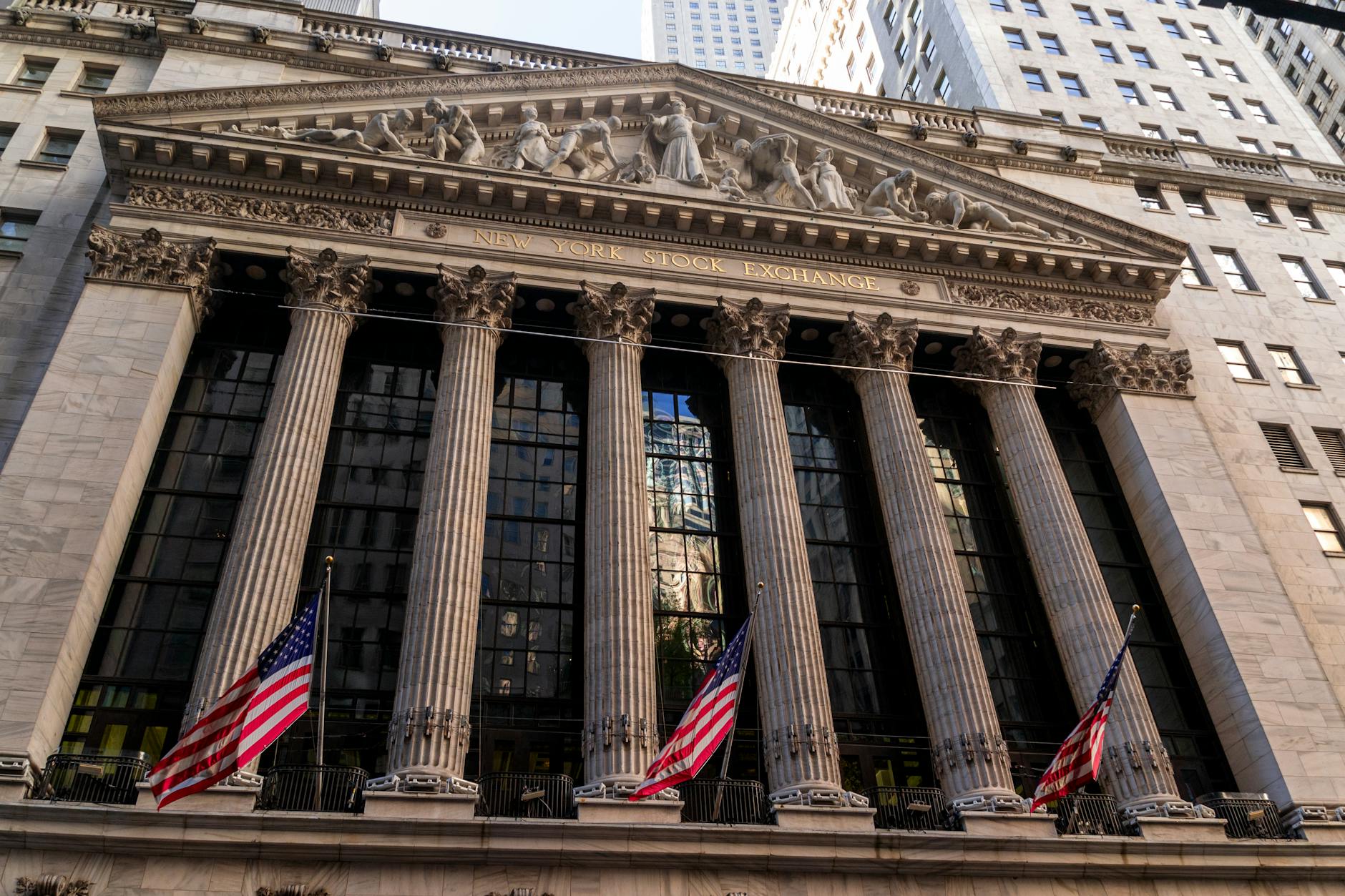
S&P 500 Futures Up 0.02% After AI-Driven Rally
U.S. equity futures were little changed, with S&P 500 futures increasing by 0.02% and Nasdaq-100 futures up 0.2%. The S&P 500 gained 1.5% for its best performance since August 4, and the Dow rose by 366 points, or 0.7%. Key contributors to this rally included a more than 11% surge in Meta Platforms and a 12% rise in Intel. This market movement follows a 4.5% drop in West Texas Intermediate crude futures, achieving $95.78 a barrel, and allows investors to assess upcoming earnings reports, which include AutoZone.
Read More: S&P 500 Futures Up 0.02% After AI-Driven Rally
Nasdaq Rises 2% to Record High on Cooling Oil Prices
On September 21, 2026, the Nasdaq rose 2% to close at a record high, driven by a surge in AI stocks alongside falling oil prices and bond yields. This uptick represents momentum in the tech sector, indicating investor confidence. The S&P 500 index also sees upward movement, fueled by the same factors impacting Nasdaq. The drop in oil prices directly contributes to this market rally, emphasizing how energy costs can influence stock performance. This situation highlights that reduced oil prices can positively affect tech stocks, benefiting ordinary investors through potential growth in these sectors.
Read More: Nasdaq Rises 2% to Record High on Cooling Oil Prices
Rocket Lab (RKLB) Climbs 7% on $122 Target Reiteration
Rocket Lab (RKLB) shares rose 7% to $69.03 following Cantor Fitzgerald's reiteration of an Overweight rating and a $122 price target. Intuitive Machines (LUNR) increased 10% without a specified catalyst, indicating broad sector interest among space stocks. Cantor highlighted the upcoming debut flight of Neutron and the Iridium Communications acquisition as potential catalysts, but neither has a defined date. The overall positive trading reflects a growing interest in space industry stocks, which could influence future investments in the sector.
Read More: Rocket Lab (RKLB) Climbs 7% on $122 Target Reiteration
Stock Futures Rise After Dow's Third Losing Week
U.S. stock futures increased following the Dow's third consecutive week of losses. This rise has occurred as investors await key economic indicators and earnings reports, with particular attention to developments in the S&P 500. Market analysts note potential volatility as trading resumes. This matters for ordinary investors because futures movement may indicate potential changes in stock performance when the markets open, affecting portfolio values.
Read More: Stock Futures Rise After Dow's Third Losing Week
Nvidia (NVDA) Stock Predicted to Reach $400 Next Year
Nvidia (NASDAQ: NVDA) stock closed at approximately $222 per share. Predictions suggest a potential rise to $400 within a year, indicating an 80% increase. CEO Jensen Huang expects Nvidia to sell double the number of chips next year compared to 2026, while CFO Colette Kress forecasts 70% revenue growth for the next fiscal year. Currently, Nvidia's P/E ratio is under 28, compared to the S&P 500 average of about 25.1, suggesting it remains undervalued given its expected growth. This matters for investors as Nvidia's performance and projected growth could provide substantial upside.
Read More: Nvidia (NVDA) Stock Predicted to Reach $400 Next Year
Stock Futures Rise as Dow Slips 1.7% in Third Losing Week
U.S. stock futures rose slightly on September 15, 2026, after the Dow Jones Industrial Average fell 1.7% last week, marking its worst performance since March. S&P 500 futures increased by 0.23%, while Nasdaq-100 futures climbed 0.27%. The Dow futures rose by 0.25%. These movements follow an escalation of hostilities in the Middle East, prompting the U.S. State Department to advise caution for American travelers. This uptick in futures matters for investors as it indicates potential market recovery after recent losses in key indices.
Read More: Stock Futures Rise as Dow Slips 1.7% in Third Losing Week
Bloom Energy Not Selected Among Top 10 Investing Stocks
The Motley Fool Stock Advisor analyst team has identified a top 10 list of stocks for investors, which does not include Bloom Energy. The list highlights potential stocks that could produce significant returns, referencing historical gains from Netflix and Nvidia. Stock Advisor has achieved an average return of 932%, compared to the S&P 500's 211% return. This is significant for ordinary investors as it suggests that Bloom Energy may not currently present the same investment opportunities as the selected stocks for substantial long-term growth.
Read More: Bloom Energy Not Selected Among Top 10 Investing Stocks
Robinhood (HOOD) and AMD Lead Market Upticks Amid Mixed Trading
Dow Jones futures are set to open on Sunday evening, with the 10-year Treasury yield at 5%. While the Nasdaq posted modest gains, the Dow Jones and small-cap Russell 2000 fell to three-month lows. The S&P 500 remained stable during the mixed market activity. This matters for investors as the performance of key stocks like Robinhood (HOOD) and AMD can signal shifts in market trends and trading strategies, reflecting broader investor sentiment.
Read More: Robinhood (HOOD) and AMD Lead Market Upticks Amid Mixed Trading
S&P 500 (^GSPC) Gains 9.5% in First Half of 2026
The S&P 500 index (^GSPC) rose 9.5% on a price-only basis and nearly 10.2% with reinvested dividends in the first half of 2026. Historical averages indicate investors typically expect around a 10% annual return. The performance in the first half of 2026 shows that market movements can be volatile, highlighting the importance of a long-term investment strategy despite dips, such as during the dot-com crash and the Great Recession. For ordinary investors, this data suggests that buying and holding a diversified index fund like the Vanguard S&P 500 ETF (VOO) may be a beneficial strategy.
Read More: S&P 500 (^GSPC) Gains 9.5% in First Half of 2026
S&P 500 Up 11% YTD; Prepare for Potential Market Crash
The S&P 500 (SNPINDEX: ^GSPC) is up 11% year-to-date and may achieve four consecutive years of double-digit gains if it maintains this trend through the end of 2026. In 1999, the last time this occurred, the market subsequently crashed, losing nearly 50% over three years. Currently, the cyclically adjusted P/E ratio (CAPE) is at its second-highest level ever, signaling a potentially overvalued market. Investors are advised to consider creating a defensive portfolio in light of these economic indicators, particularly as interest rates continue to rise.
Read More: S&P 500 Up 11% YTD; Prepare for Potential Market Crash
Kospi Index Climbs 60% in 2026, Upgraded Forecast from Goldman Sachs
The Korea Composite Stock Price Index (Kospi) has increased almost 60% in 2026, with a target set by Goldman Sachs at 9,000, representing a 34% increase from the current level of 6,715. Key contributors to this growth are major semiconductor companies like Samsung and SK Hynix, which together comprise over half of the Kospi index. Earnings for Kospi firms are expected to surge by 300% in 2026 due to demand for memory chips and AI technology. Investors may find opportunities, given the Kospi's current P/E ratio of approximately 12, significantly lower than the S&P 500's ratio of around 26.
Read More: Kospi Index Climbs 60% in 2026, Upgraded Forecast from Goldman Sachs
S&P 500 Gains 6% as Market Rebounds from Fed Rate Hike
The S&P 500 and Nasdaq posted significant gains, marking the largest increases in six weeks, as oil prices eased and Treasury yields dipped. This rebound follows the Federal Reserve's first rate hike in three years. Investors are witnessing buy signals from companies like SpaceX and AMD. The recovery indicates a shift in market sentiment, potentially impacting future trading strategies for investors as they prepare for upcoming performance metrics and opportunities.
Read More: S&P 500 Gains 6% as Market Rebounds from Fed Rate Hike
Futures Little Changed Post Fed Rate Hike: Dow Up 30 Points
U.S. stock futures showed little change on Thursday after the Federal Reserve's first interest rate hike in three years. The Dow Jones Industrial Average futures rose by 30 points, or 0.06%, while S&P 500 and Nasdaq-100 futures dipped 0.08% and 0.15%, respectively. On Wednesday, the Dow closed up by 316 points, or 0.6%, and the S&P 500 rallied 1.1%. Investors are responding to the rate hike with optimism in the technology sector, which may support corporate profits moving forward. This matters for investors as clarity on future rate hikes can influence market sentiment and stock performance.
Read More: Futures Little Changed Post Fed Rate Hike: Dow Up 30 Points
S&P 500 CAPE Ratio Reaches 40.6, Signs from Market History
As of now, the S&P 500's CAPE ratio (cyclically adjusted price-to-earnings ratio) is 40.6, down from 41.1 last month. This figure is significantly above its long-run average of 17.4, indicating high market valuation. Historically, a similar CAPE level was reached in December 1999, preceding a substantial market decline. Presently, the S&P 500 is up 20% from its March low, with the Dow Jones and Nasdaq also posting gains. This information is critical for investors as it suggests potential market overvaluation and the need for caution in investment strategies.
Read More: S&P 500 CAPE Ratio Reaches 40.6, Signs from Market History
Stock Futures Steady Ahead of Fed Rate Decision on 3.5% Target
U.S. equity futures were little changed ahead of an important Federal Reserve interest rate decision. S&P 500 and Nasdaq-100 futures each rose by 0.1%. The Dow Jones Industrial Average futures increased by 56 points, also 0.1%. Current odds suggest a 92% likelihood of a quarter-point hike for the Fed's meeting, raising the target rate from 3.5% to 3.75%. Investors should be aware that the Fed's decision could impact market movements and investor sentiment in the coming weeks.
Read More: Stock Futures Steady Ahead of Fed Rate Decision on 3.5% Target
SpaceX (SPCX) Market Cap Hits $2 Trillion Amidst IPO Volatility
SpaceX (NASDAQ: SPCX) currently has a market capitalization of $2 trillion. The initial public offering (IPO) was priced at $150 per share, which then rose to over $225 before falling to nearly $105, ultimately returning to $150. In the second quarter, revenue increased by 92% year over year to $7.8 billion, thanks to growth in its artificial intelligence (AI) sector. The stock's price-to-sales (P/S) ratio stands at 70, significantly higher than the S&P 500 average of 3.8, suggesting that considerable growth is expected. This matters for investors as it highlights the volatile nature of SpaceX's stock and the high expectations already built into its valuation.
Read More: SpaceX (SPCX) Market Cap Hits $2 Trillion Amidst IPO Volatility
Stock Futures Steady as Fed Decision Approaches and Oil Prices Rise
Stock futures are relatively unchanged as traders await the Federal Reserve's upcoming policy decision. As of Monday evening, S&P 500 futures were up 0.05%, while Dow Jones Industrial Average futures gained 21 points (0.04%), and Nasdaq 100 futures advanced 0.03%. Elevated oil prices have impacted the market, with Brent futures closing above $105 per barrel, influenced by a closure of a key pipeline by Saudi Arabia. The Fed's decision on rates is expected soon, with a 92% likelihood of a quarter-point increase, which is significant for market participants.
Read More: Stock Futures Steady as Fed Decision Approaches and Oil Prices Rise
FederalReserve rate hike could impact S&P 500 market performance
Oil prices have risen above $100 per barrel. The August payrolls report indicates the US added three times more jobs than expected, leading to a 90% chance of a Federal Reserve rate increase on Wednesday. Goldman Sachs analysts point out that historically, the S&P 500 index (^GSPC) has seen a negative average return of 2% in the three months following the beginning of a Fed tightening cycle. However, over a longer period, the S&P 500 typically achieves a 12-month return of 9%. This is relevant for investors as potential rate hikes may lead to short-term market volatility.
Read More: FederalReserve rate hike could impact S&P 500 market performance
S&P 500 Near Record Highs Despite Low Consumer Sentiment
The S&P 500 index is just 2.5% away from its most recent record high, reflecting strong market performance despite low consumer sentiment. The University of Michigan Consumer Sentiment Index stands at just under 48 as of September 2026, among its lowest levels on record. Consumer confidence has been impacted by factors such as high inflation, despite a significant commitment to artificial intelligence spending by major tech firms, which totaled $303 billion in the first half of 2026. This disconnect suggests potential volatility ahead, making it crucial for ordinary investors to stay informed about market trends.
Read More: S&P 500 Near Record Highs Despite Low Consumer Sentiment
SPYI ETF Offers 12% Annual Income with Return of Capital Benefits
The NEOS S&P 500 High Income ETF (SPYI) currently provides an annual distribution rate of approximately 12%. According to its August Section 19a-1 notice, around 97% of the latest distribution is classified as return of capital (ROC). This classification allows tax deferral by reducing an investor's cost basis, which can be advantageous for retirees in taxable brokerage accounts. The ETF employs an actively managed options strategy alongside its S&P 500 stock portfolio, aiming for higher potential returns. This matters for ordinary investors as it offers a potentially tax-efficient income stream.
Read More: SPYI ETF Offers 12% Annual Income with Return of Capital Benefits
Stock Futures Fall as AI IPOs Delay and Oil Surges Over $100
Stock futures fell on Sunday, with Dow Jones Industrial Average futures down 179 points (0.4%), S&P 500 futures losing 0.6%, and Nasdaq-100 futures dropping 1.2%. OpenAI's CEO stated the company will not pursue an IPO this year, conflicting with previous statements about a 2027 timeline. Oil prices rose over 2%, surpassing $100 per barrel due to Saudi Arabia closing a key pipeline, complicating the stock market outlook. These factors raise uncertainty for investors, as shifts in AI IPO timelines and rising oil prices could influence market performance.
Read More: Stock Futures Fall as AI IPOs Delay and Oil Surges Over $100
ETFs vs. Mutual Funds: Vanguard ETF Expense Ratios Compared
In 2027, the author plans to increase investments in ETFs compared to mutual funds and individual stocks. The Vanguard S&P 500 ETF (VOO) has an expense ratio of 0.03%, while the Vanguard 500 Mutual Fund has an expense ratio of 0.04%, making the mutual fund about 33% more expensive. ETFs offer lower costs, minimal capital gains distributions, and all-day trading capabilities, appealing to both passive and active investors. This information is vital for ordinary investors as it highlights a cost-effective investment strategy with ETFs.
Read More: ETFs vs. Mutual Funds: Vanguard ETF Expense Ratios Compared
Vanguard U.S. Momentum Factor ETF VFMO Beats S&P 500 in 2026
The Vanguard U.S. Momentum Factor ETF (VFMO) has returned 18.5% in 2026, outperforming the S&P 500's 10.9% increase reported as of September 10. Launched in 2018, the ETF has consistently beaten the market each year. As of September 9, it held 697 stocks, with significant weights in Technology (25.1%), Healthcare (20.8%), and Industrials (19%). Its high turnover rate of 99.9% suggests that the ETF frequently refreshes its holdings, which may help maintain its momentum but also indicates potential volatility for investors.
Read More: Vanguard U.S. Momentum Factor ETF VFMO Beats S&P 500 in 2026
Tesla (TSLA) Performance Since S&P 500 Addition Shows 57% Growth
On December 18, 2020, Tesla (NASDAQ:TSLA) shares rose almost 6% to close at $695, with over 200 million shares traded. A $10,000 investment in Tesla would now be worth approximately $15,700, while the same amount in an S&P 500 index fund would have grown to about $20,500. Since joining the S&P 500, Tesla's market value reached over $658 billion, trading at more than 900 times its 2020 earnings. Tesla's revenue now exceeds $100 billion, generating a net income of about $3.8 billion over the past four quarters, which is significantly higher than its earnings in 2020, yet lower than its peak in 2022. This analysis highlights the performance gap between Tesla and the S&P 500, which is crucial for investors assessing growth potential in index versus individual stocks.
Read More: Tesla (TSLA) Performance Since S&P 500 Addition Shows 57% Growth
Vanguard S&P 500 ETF (VOO) Concentration Risk Exposed
Investors in the Vanguard S&P 500 ETF (VOO) should note that the top 10 holdings represent 38% of the fund's total value, with the top three companies alone comprising 20%. This concentration may expose investors to higher risks during market downturns, particularly as the fund is market cap-weighted, giving larger companies more influence. Nvidia, which has averaged annual gains of 70% over the past three years, exemplifies the potential volatility in the tech sector. Understanding these dynamics is crucial for ordinary investors managing long-term portfolios in index funds.
Read More: Vanguard S&P 500 ETF (VOO) Concentration Risk Exposed
Falling Oil Price Revives Stocks; Focus on Fed Meeting Next Week
On Friday, oil prices fell, contributing to a rebound in the stock market. The Dow Jones Industrial Average increased by 509 points (0.98%), with the S&P 500 and Nasdaq gaining 0.86% and 0.96%, respectively. Jim Cramer highlighted the importance of the upcoming Federal Reserve meeting, where policymakers are expected to raise rates to combat inflation. Factors like the ongoing conflict in Iran could further influence oil prices and market stability. Ordinary investors should be aware that the market's next direction may heavily depend on these inflationary pressures and interest rate decisions.
Read More: Falling Oil Price Revives Stocks; Focus on Fed Meeting Next Week
Bloom Energy (BE) Stock Rises 7% After S&P 500 Addition
Bloom Energy (BE) shares increased 7% to $276.31 following its confirmation for inclusion in the S&P 500. This announcement, effective September 21, has triggered significant index buying, affecting broader fuel cell stocks, with FuelCell Energy (FCEL) up 4% to $16.22 and Plug Power (PLUG) rising 2% to $2.15. In contrast, the SPDR S&P 500 ETF Trust (SPY) and the iShares Global Clean Energy ETF (ICLN) each rose by 1%. This event highlights the influence of index changes on stock prices, providing potential investment opportunities for investors monitoring the fuel cell sector.
Read More: Bloom Energy (BE) Stock Rises 7% After S&P 500 Addition
Stock Futures Stable Ahead of August CPI Report and Rate Decisions
Stock futures were little changed as traders anticipated the upcoming August consumer price index (CPI) report. The Dow Jones Industrial Average futures were down by 11 points, and the Nasdaq 100 futures increased by less than 0.1%. In the regular trading day, the Dow lost over 300 points, or 0.6%, coinciding with a weekly decline of 2.5% for the Dow and 1.6% for both the S&P 500 and Nasdaq. The private sector believes there is a 71% likelihood of a Federal Reserve interest rate hike based on the CPI results, which could significantly impact inflation expectations and bond yields for ordinary investors.
Read More: Stock Futures Stable Ahead of August CPI Report and Rate Decisions
S&P 500 Ends Down as Treasury Yields Rise and Inflation Concerns Grow
The S&P 500 Index closed lower as traders reacted to rising Treasury yields. The increase in yields has led to concerns about inflation, impacting investor sentiment and contributing to market volatility. Oil prices have surged, rising above $100, the highest level since May, which is adding to inflation fears. This scenario is significant for markets as it may lead to increased borrowing costs and impact economic growth, influencing investment strategies for ordinary investors.
Read More: S&P 500 Ends Down as Treasury Yields Rise and Inflation Concerns Grow
U.S. Oil Prices Hit $100 Per Barrel, Stocks Retreat
U.S. oil prices have surged to $100 a barrel, causing the Dow, S&P 500, and Nasdaq to decline. Rising Treasury yields have also contributed to market volatility. As a result, stocks are on track for weekly losses. Upcoming Oracle earnings could further impact investor sentiment. This is important for investors as rising oil prices may threaten economic stability and influence stock performance.
Read More: U.S. Oil Prices Hit $100 Per Barrel, Stocks Retreat
Bloom Energy (BE) Sees $350 Million Options Volume Surge
On September 8, Bloom Energy (BE) experienced nearly $350 million in options volume, with call options outnumbering puts by 50%. The stock rose by 11% that day, following news of inclusion in the S&P 500. Reports indicate that Nancy Pelosi's spouse purchased shares and call options in late July, just before the passive fund buying began. This activity in options trading reflects significant investor interest and volume, which may indicate future volatility in BE's stock price for ordinary investors.
Read More: Bloom Energy (BE) Sees $350 Million Options Volume Surge
Stock Futures Steady Ahead of Key Inflation Reports This Week
Stock futures remained near unchanged levels with Dow futures up 54 points (0.1%) and S&P 500 futures gaining 0.04%. This follows a decline in major indexes, with the Dow dropping just over 400 points (0.8%) and the S&P 500 falling 0.5%. Rising Treasury yields and climbing oil prices have contributed to market pressures. The upcoming producer price index is expected to show a 0.3% monthly gain and 5.3% increase year over year, which will be significant for traders. The inflation data impacts market outlooks and can influence stock prices for investors.
Read More: Stock Futures Steady Ahead of Key Inflation Reports This Week
Apple iPhone Event Approaches Amid Dow Jones Futures Dip
Dow Jones futures fell early Wednesday, along with S&P 500 and Nasdaq futures. Oil prices rose, with Brent crude reaching $100. The stock market experienced losses on key indexes, particularly the Dow Jones, due to rising oil prices and Treasury yields reaching new long-term highs. An Apple (AAPL) iPhone event is scheduled, highlighting ongoing interest in tech amidst market volatility. This matters for investors as it reflects broader market concerns over oil pricing and interest rates, impacting stock valuations.
Read More: Apple iPhone Event Approaches Amid Dow Jones Futures Dip
Stock Futures Little Changed as Brent Crude Nears $100 Per Barrel
Stock futures are slightly changed following a recent losing session. Brent crude is approaching $100 per barrel. The S&P 500 and Dow are set for a steady start, while the Nasdaq is expected to rise ahead of an upcoming Apple (AAPL) launch event. This situation with crude oil prices can impact consumer costs and market trends, potentially affecting investor sentiment.
Read More: Stock Futures Little Changed as Brent Crude Nears $100 Per Barrel