Cloud News & Analysis
50 articles
Market Mood

Nscale Considers Delaying $35 Billion AI Cloud IPO Listing
Nscale, an AI cloud technology company, is reportedly considering delaying its planned public offering that values the company at $35 billion. The Telegraph reports that the company is evaluating the timing of its IPO amid current market conditions. No specific reasons or new dates have been disclosed by Nscale or its representatives. The potential delay of this $35 billion listing could affect the broader AI cloud sector's market entry and investor appetite for large tech IPOs. The listing size indicates significant market interest, but the delay suggests caution due to prevailing economic or market uncertainties. No details about the impact on Nscale's financials or projections have been provided. This development matters because it reflects the challenges AI-focused companies face when going public in volatile markets. Investors awaiting the listing should note that the timing and pricing could change, which might influence supply and demand dynamics for new tech stocks.
Read More: Nscale Considers Delaying $35 Billion AI Cloud IPO Listing
Alphabet (GOOGL) Cloud Revenue Doubles While Stock Drops 12%
Alphabet's (GOOGL) cloud business revenue doubled recently. Despite this growth, Alphabet's stock price fell by 12%. The article discusses the contrast between the cloud segment's rapid growth and the stock's negative market reaction. The doubling of Alphabet's cloud revenue highlights significant expansion in this segment. However, investors reacted negatively, causing a notable 12% drop in the company's stock. This drop occurred despite the positive revenue development. This news matters because it shows that even strong revenue growth in a significant business area like cloud services does not always translate immediately into higher stock prices. For investors, the 12% decline in price indicates market concerns that may relate to other factors, beyond just cloud revenue growth.
Read More: Alphabet (GOOGL) Cloud Revenue Doubles While Stock Drops 12%
Alphabet (GOOGL) Cloud Revenue Doubles but Stock Faces Pressure
Alphabet (GOOGL) reported that its cloud revenue doubled, indicating strong growth in that business segment. However, despite this increase, investors remain concerned that artificial intelligence (AI) developments are negatively affecting the company's ability to generate revenue from search queries. The rise in cloud revenue highlights one of Alphabet's expanding areas, but the challenges in monetizing AI-driven changes to search impact its core business model. Wall Street reacted cautiously to the results, reflecting worries over Alphabet's future search-related profitability. This matters for investors because it shows mixed signals for Alphabet's revenue streams. While cloud services growth can drive future income, difficulties in search revenue, a major part of Alphabet's business, could impact overall earnings. The tension between these factors may influence Alphabet's stock price movements going forward.
Read More: Alphabet (GOOGL) Cloud Revenue Doubles but Stock Faces Pressure
Microsoft (MSFT) Reports 19% Revenue Growth to $92.3bn Amid Capex Delays
Microsoft (MSFT) reported a 19% increase in overall revenue, reaching $92.3 billion in the quarter ending September. The company attributed slower capital expenditure (capex) to delays in data centre projects. The revenue growth reflects continued demand, but the slowdown in capex suggests some operational constraints. Microsoft did not provide specific figures for capital expenditure or further details regarding the causes and expected resolution of the data centre delays. This matters because data centre investments are crucial for Microsoft’s cloud infrastructure growth, which affects future capacity and revenue generation. The reported revenue growth confirms strong sales, but capex delays may impact the timing of infrastructure expansion and associated costs.
Read More: Microsoft (MSFT) Reports 19% Revenue Growth to $92.3bn Amid Capex Delays
Oracle (ORCL) Forecasts $30bn Free Cash Flow by 2029, Shares Rise 12%
Oracle's (ORCL) shares rose 12% after the company told investors its artificial intelligence (AI) investments will yield returns sooner than expected. The database and cloud services provider projects a free cash flow of $30 billion by 2029. Additionally, Oracle plans to limit further capital raising for its data center expansion strategy to $20 billion. This sets a concrete cap on spending while emphasizing expected returns from AI advancements. This matters for investors because clearer financial targets and spending limits offer more certainty about Oracle's profitability and capital discipline amid heavy investments in AI and infrastructure.
Read More: Oracle (ORCL) Forecasts $30bn Free Cash Flow by 2029, Shares Rise 12%
Microsoft (MSFT) Q1 Earnings Preview: $4.73 EPS, $90.69B Revenue Expected
Microsoft (MSFT) will report its fiscal first quarter earnings after the market close on Wednesday. Analysts expect adjusted earnings of $4.73 per share and revenue of $90.69 billion. This quarter marks a change as Microsoft will report under two operating segments for the first time since 1998, consolidating from three segments that covered Azure, Office, and Windows. Azure cloud revenue disclosure will start with an expected $32.32 billion, reflecting over 44% growth. Microsoft continues to focus on expanding its artificial intelligence infrastructure and product offerings while maintaining positive free cash flow. This contrasts with its cloud competitors Alphabet, Amazon, and Meta, which reported negative free cash flows in their recent quarters. Microsoft announced plans to cut 4,800 jobs earlier in the quarter and is now offering buyouts to up to 60,000 employees to manage costs amid its AI investments. Capital expenditure and finance leases for the quarter are projected at $50.67 billion. The company also launched an AI implementation unit and a Copilot AI app with coding features. Executives will provide additional guidance in a conference call at 5:30 p.m. ET. This report matters to investors as it signals Microsoft’s financial health while navigating AI growth and workforce restructuring.
Read More: Microsoft (MSFT) Q1 Earnings Preview: $4.73 EPS, $90.69B Revenue Expected
Oracle (ORCL) Expands AI with ChatGPT Integration, New Cloud Chips
Oracle (ORCL) announced an expanded partnership with OpenAI, integrating ChatGPT and Codex into its applications to enhance database functionality. Mahesh Thiagarajan, Oracle's president of Cloud Infrastructure, highlighted that ChatGPT enables users to build, deploy, and manage applications through Oracle's platforms. This collaboration will be featured at Oracle AI World in Las Vegas with OpenAI CEO Sam Altman joining Oracle co-CEO Clay Magouyrk on stage. Oracle is also broadening its cloud infrastructure hardware options by including Google's tensor processing unit (TPU) AI chips and OpenAI's Jalapeño chip. This is the first time Google's custom chips will operate on a non-Google hyperscaler cloud, providing customers with more AI acceleration choices amid ongoing chip scarcity. Oracle continues to utilize Nvidia GPUs, praised as highly versatile, acknowledging the vast AI market. The AI chipmaker Cerebras will also run its technology on Oracle Cloud Infrastructure, but details on the scale remain undisclosed due to a quiet period. Following the announcement, Cerebras stock rose about 8%, and Oracle shares increased nearly 5%. This move illustrates Oracle’s commitment to expanding AI capability and hardware flexibility across its cloud services. This integration matters for investors as Oracle aims to strengthen its competitive position in cloud AI services, potentially increasing demand for its cloud infrastructure through new AI hardware options and enhanced application capabilities.
Read More: Oracle (ORCL) Expands AI with ChatGPT Integration, New Cloud Chips
Microsoft (MSFT) Offers Voluntary Buyouts to 60,000 Employees
Microsoft (MSFT) announced a voluntary exit offer for about 60,000 employees with experience levels of 70 or below in the U.S., Canada, India, and the United Kingdom. This offer builds on its earlier April voluntary retirement program, which covered about 7% of U.S. employees. Amy Coleman, the executive vice president and chief people officer at Microsoft, described the program as a way to provide greater flexibility and help employees shape their next chapter. The company has been increasing spending on data centers to meet high demand for artificial intelligence and cloud services, which has put some strain on its finances. Despite this, Microsoft maintained positive free cash flow in the second quarter, unlike its cloud competitors Alphabet and Amazon who reported negative free cash flow. Some internal teams, including marketing, sales, and engineering, have chosen not to participate in the buyouts. This program is part of Microsoft's efforts to manage costs amid heavy investment in AI infrastructure. For ordinary investors, understanding the scale and scope of this buyout program highlights how Microsoft is adjusting its workforce to balance increased spending and maintain financial health.
Read More: Microsoft (MSFT) Offers Voluntary Buyouts to 60,000 Employees
Nvidia (NVDA) Faces Credit Test With $36B AI Cloud Agreements Amid Neocloud Selloff
Nvidia (NVDA) is encountering a significant challenge as credit markets tighten for its AI-focused partners, the so-called neoclouds. The company has $36 billion in off-balance-sheet AI cloud agreements backing up these partners, alongside a guarantee for up to $105 billion supporting a 10 gigawatt OpenAI data center project in Ohio. Nvidia also signed leases for $20 billion in future data centers to be assigned later to third parties. These financial commitments serve as backstops that activate primarily if the partners default. Market pressure on neoclouds has intensified, with shares of CoreWeave, Nebius, and IREN—key Nvidia-backed companies—all dropping by at least 30% in October. CoreWeave's credit default swap spread surged past 11%, indicating increased investor concerns over potential defaults. Other Nvidia-backed cloud firms, such as Firmus, Nscale, and SB Energy, have faced difficulties, with Firmus recently withdrawing its IPO plans and the latter two delaying updates after IPO filings. Nvidia's stock fell 7.6% in October as of the previous Friday, marking its worst monthly decline since November of the prior year. CEO Jensen Huang acknowledged the strong demand for neoclouds but noted a working capital shortfall hindering growth. This financial strain on Nvidia’s AI financing strategy highlights the risk of high market expectations not being met, which could result in Nvidia facing potential liabilities if defaults occur. This situation matters because Nvidia’s extensive financial backstops for AI infrastructure projects mean that credit market conditions and neocloud stability directly impact its financial risk exposure and future capital costs. Investors should watch Nvidia’s off-balance-sheet commitments and neocloud credit health as key indicators of Nvidia’s financial resilience in supporting AI expansion.
Read More: Nvidia (NVDA) Faces Credit Test With $36B AI Cloud Agreements Amid Neocloud Selloff
Amazon (AMZN) AWS Cloud Capacity Sold Out Through 2027, CEO Says
Amazon's (AMZN) CEO announced that its Amazon Web Services (AWS) cloud computing capacity is largely sold out through 2027. This indicates high demand and strong growth prospects for AWS over the next several years. The announcement highlights Amazon's leadership position in cloud infrastructure and the ongoing expansion of cloud services. AWS's capacity being sold out well into 2027 suggests significant growth in customer adoption and usage of cloud resources. This level of booked capacity is unusual for the industry, indicating strong business momentum. CEO comments reinforce confidence in AWS's ability to sustain growth and customer retention. For investors, the advance booking of AWS capacity through 2027 matters because it provides a clear revenue visibility and stability indicator. It signals robust demand that can support Amazon's cloud segment revenue and profitability over the medium term. This forward visibility on capacity sales may impact Amazon’s (AMZN) valuation and investor expectations for cloud segment growth.
Read More: Amazon (AMZN) AWS Cloud Capacity Sold Out Through 2027, CEO Says
Google Cloud Outage Prompts European Regulators' Bank Inquiries
European financial regulators have launched inquiries into Google following a cloud service outage that affected several banks. The outage disrupted cloud computing services critical to banking operations, leading to regulatory scrutiny on how such failures impact financial stability. Google experienced a significant cloud outage that caused interruptions for various European banks relying on its infrastructure. Regulators are examining the circumstances and the response to assess risks and ensure compliance with financial operational standards. Details on the outage duration, affected banks, or Google’s official statements were not disclosed in the article. This scrutiny highlights the growing importance of cloud service providers in banking and the need for robust risk management. The regulators’ focus may lead to stricter guidelines on cloud reliability and outage reporting for financial institutions and their service providers. For investors, this indicates increasing regulatory attention on cloud infrastructure risks influencing banking operations and potentially affecting technology providers such as Google.
Read More: Google Cloud Outage Prompts European Regulators' Bank Inquiries
Oracle (ORCL) vs Microsoft (MSFT) AI Cloud Stocks Outlook for 5 Years
This article compares Oracle (ORCL) and Microsoft (MSFT) as AI cloud stocks for a five-year investment horizon. It discusses their positions in the AI cloud market and evaluates which company may be the better stock to own based on current trends and strategies. The comparison highlights key aspects of their AI cloud offerings and market potential. It aims to provide investors with insights into the strengths and future prospects of both companies in this rapidly evolving sector. Understanding the competitive landscape between Oracle and Microsoft in AI cloud computing helps investors make informed decisions. The article's focus on a five-year outlook offers a medium-term perspective on growth in AI cloud technologies for these two leading companies.
Read More: Oracle (ORCL) vs Microsoft (MSFT) AI Cloud Stocks Outlook for 5 Years
OVHcloud Reports Stronger FY 2026 Earnings and Raises Growth Outlook
OVHcloud released its earnings call transcript reporting stronger financial results for fiscal year 2026. The company indicated it has improved its earnings compared to previous expectations and raised its growth outlook for the coming period. Specific figures on revenue or profit were not provided in the transcript excerpt. During the call, OVHcloud highlighted its progress and reiterated confidence in growth potential based on current business momentum. Details on factors contributing to the improved earnings or specific growth projections were not disclosed in the available information. This update matters because it signals stronger operational performance at OVHcloud, which could influence investor decisions and market perception of the company's stock. The raised growth outlook suggests management sees better prospects for revenue or profit gains in the near future, affecting valuation and investment interest.
Read More: OVHcloud Reports Stronger FY 2026 Earnings and Raises Growth Outlook
AI Cloud Spending Divides Firms: Funded vs. Stretched
The article discusses how different companies are approaching AI cloud spending, creating a divide based on financial capacity. Companies with ample funding are accelerating their AI investments, while those with tighter budgets are facing challenges in scaling their AI infrastructure. This division is influencing corporate strategies and could impact long-term competitive positioning in various industries. In detail, well-funded companies are leveraging their resources to enhance AI capabilities, seeing it as a vital area for growth and innovation. Conversely, companies with limited budgets are strained, potentially delaying AI projects or scaling them down, which could hinder their ability to compete effectively. This divide in AI cloud spending is significant as it may lead to increased disparities in technological innovation and market leadership. Companies with more significant AI investments could gain competitive advantages, potentially outpacing those who are financially constrained.
Read More: AI Cloud Spending Divides Firms: Funded vs. Stretched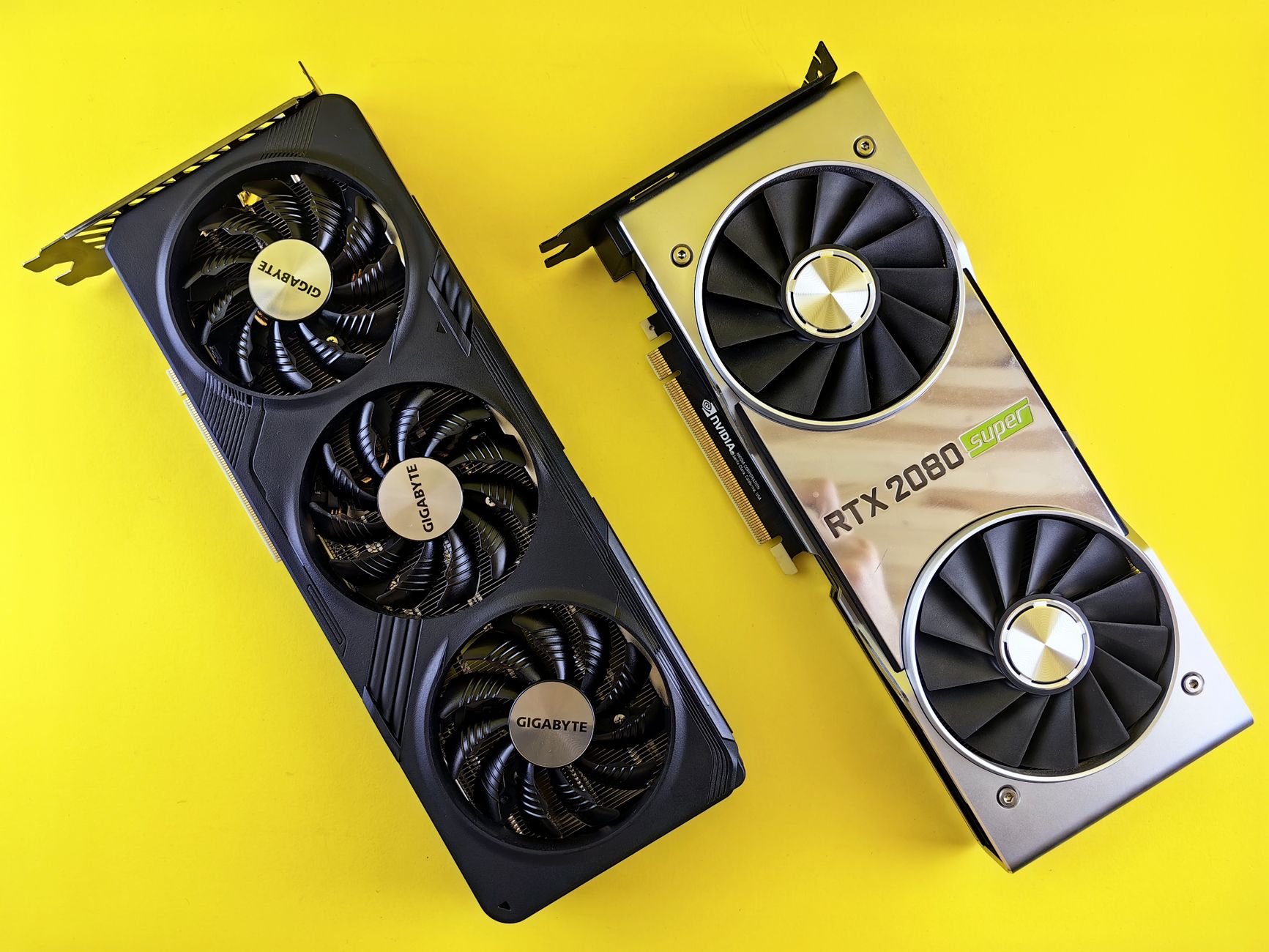
Nvidia's Stock Soars Amid Record GPU Demand
Nvidia's (NVDA) GPUs have become highly sought-after for AI applications, spurring the company's stock to new highs. Its market capitalization is nearing $6 trillion as demand for GPUs continues to grow. Nvidia is projecting $108 billion in revenue for the October quarter, marking a significant 89% increase from the previous year. The expansion in demand is being driven by cloud providers like Amazon, Microsoft, and Google, and new entities known as neoclouds are contributing to this growth as well. Nvidia's business diversification is evident from a filing indicating that five clients each accounted for at least 10% of its accounts receivable in the July quarter, up from three clients in January. The number of Nvidia GPU providers documented as of September rose to 323, compared to 209 less than 11 months earlier. CEO Jensen Huang highlighted at a recent tech conference that these trends will lead to a new array of neoclouds with significant backlog figures. The increased demand for GPUs is tied to companies turning to cloud services to handle AI workloads, particularly following the launch of ChatGPT in 2022. Companies are increasingly using Amazon, Microsoft, and Google for cloud services due to their established reputations, with big firms like Anthropic and OpenAI committing substantial spending with these providers. This continuous demand for Nvidia's products is vital for investors as it signals robust growth potential for the company.
Read More: Nvidia's Stock Soars Amid Record GPU Demand
UK Lawmakers Warn on Reliance on U.S. Cloud Giants
UK lawmakers have raised concerns over the country's dependency on major U.S. cloud providers like Amazon Web Services (AWS), Microsoft Azure, and Google Cloud. A report described the situation as posing a significant strategic and security risk. The lawmakers highlighted issues such as data privacy and the potential for service disruptions in case of geopolitical tensions affecting the tech giants. They urged for regulatory measures and policy changes to address these risks. No specific figures were mentioned in the report. This issue is crucial since it impacts the security and competitive positioning of the UK's digital infrastructure, which is vital for both public and private sectors.
Read More: UK Lawmakers Warn on Reliance on U.S. Cloud Giants
Google (GOOGL) Unveils Gemini 4 with $2 Introductory Pricing
Google (GOOGL) introduced its Gemini 4 Argon model, which aims to advance coding and cybersecurity. The model's pricing is set at $2 per million input tokens and $10 per million output tokens, matching OpenAI's GPT-6.1 pricing. Alphabet's stock has decreased by about 6% over the past three months. Competitor Meta has gained traction with its Muse app, which has over 5 million downloads, showcasing strong demand for personal agents. This development matters to investors as Google's ability to enhance its personal agent offerings could impact its cloud business and customer engagement.
Read More: Google (GOOGL) Unveils Gemini 4 with $2 Introductory Pricing
Alibaba (BABA) AI Chip to Support 20GW Data Centers by 2032
Alibaba (BABA) has unveiled a new AI chip that is claimed to be China's most powerful. The company aims for a data-center capacity of 20 gigawatts (GW) by 2032, leveraging machine 'thinking' projected to achieve 1,000 times human capacity. The new AI model will have between 5 trillion and 10 trillion parameters. This development positions Alibaba to potentially enhance its cloud services, which could impact their market competitiveness in the tech industry.
Read More: Alibaba (BABA) AI Chip to Support 20GW Data Centers by 2032
Microsoft (MSFT) Software Business Growth Potential Highlighted
Analysts emphasize that while Microsoft's (MSFT) cloud-computing opportunities are well-recognized, the potential revenue from its software business might be overlooked. The software division is becoming increasingly significant alongside cloud revenues. This insight points to a growing market for Microsoft's software products, suggesting a potential for revenue growth that may not be fully appreciated by investors. Understanding this could affect investment strategies centered around MSFT's overall performance.
Read More: Microsoft (MSFT) Software Business Growth Potential Highlighted
CoreWeave (CRWV) Reports $40M Annualized Revenue Per Megawatt
On September 17, CoreWeave (NASDAQ: CRWV) announced it has been signing customers at higher prices since June 30, generating around $40 million of annualized revenue per megawatt of power. The revenue backlog as of June 30 was about $104 billion, which increased with over $25 billion in fresh commitments during the third quarter. However, CoreWeave reported a net loss of $626 million, up from a loss of $290 million a year earlier, with operating income dropping to a loss of $49 million. CoreWeave's pricing strategy and customer demand could impact its ability to manage costs and debt, especially as contract renewals approach. This is significant for investors as the annualized revenue figures show strong demand despite overall losses.
Read More: CoreWeave (CRWV) Reports $40M Annualized Revenue Per Megawatt
Meta (META) Raises 2026 Capex Guidance to $130-$145 Billion
Meta Platforms (META) increased its 2026 capital expenditure guidance to between $130 billion and $145 billion from a previous range of $125 billion to $145 billion. This increase nearly doubles its total 2025 spending of $72.215 billion. In Q2 2026, Meta reported a 91% drop in free cash flow and an operating margin decrease from 43% to 31%. With $90.3 billion in cash and marketable securities and $83.7 billion in debt, Meta aims to position itself as a significant AI infrastructure operator, indicating potential long-term growth opportunities for investors.
Read More: Meta (META) Raises 2026 Capex Guidance to $130-$145 BillionOracle (ORCL) Reports $664 Billion Backlog-to-Revenue Ratio in 2026
Oracle's (ORCL) share price is down about 28% year-to-date and 57% from its lifetime high. However, the company reported a remaining performance obligation (RPO) of $664 billion, which suggests strong demand for its cloud infrastructure services. Over the past twelve months, Oracle's sales reached approximately $71.8 billion, indicating its backlog is 9.2 times recent sales. With guidance pointing to an expected revenue growth of around 34% this year and earnings growth of about 19%, investors may see significant returns if Oracle successfully capitalizes on its AI initiatives.
Read More: Oracle (ORCL) Reports $664 Billion Backlog-to-Revenue Ratio in 2026
Hyperscaler CDS Risk Increases to 60 Basis Points, Apollo Reports
Apollo Global Management warned that corporate debt linked to major cloud computing firms is becoming riskier. As of October 2025, the gap between hyperscaler credit default swaps (CDS) and bank CDS widened to approximately 60 basis points from around 0. This rise is not due to increased dealer hedging but reflects worsening hyperscaler credit fundamentals, including rising leverage and negative free cash flow. This trend could affect financial conditions for cloud providers, influencing their ability to manage debt in an AI-driven market.
Read More: Hyperscaler CDS Risk Increases to 60 Basis Points, Apollo Reports
Microsoft (MSFT) Revenue Hits $331.8 Billion by Fiscal 2026
Microsoft (MSFT) generated $331.8 billion in revenue and $155.2 billion in operating income for fiscal 2026, a significant increase from $85.3 billion and $20.2 billion in fiscal 2016. Azure alone contributed over $100 billion to annual revenue, with cloud services revenue growing 43% in Q4 of fiscal 2026. The company invested $115.9 billion in property and equipment, an 80% increase year-over-year. These developments indicate strong demand in cloud and AI sectors, which are essential for long-term growth and may impact future stock performance for investors.
Read More: Microsoft (MSFT) Revenue Hits $331.8 Billion by Fiscal 2026
Akamai Technologies (AKAM) Reports $1.1B Revenue, Endorsed by Cramer
Akamai Technologies (AKAM) reported revenue of $1.1 billion, marking a 5% increase from the prior year. The company's security revenue was $604 million, up 10%, and cloud infrastructure revenue hit $99 million, up 39%. Jim Cramer endorsed Akamai during his show, labeling it a terrific buy, highlighting its shift towards higher-margin cybersecurity and cloud services. Akamai has secured over $2.8 billion in multi-year cloud deals, including a significant $1.8 billion contract with Anthropic. This is relevant for investors as it indicates potential future growth driven by AI and security revenue.
Read More: Akamai Technologies (AKAM) Reports $1.1B Revenue, Endorsed by Cramer
Oracle (ORCL) Reports $664B Backlog and 121% Cloud Revenue Growth
Oracle (ORCL) reported a $664 billion revenue backlog, an increase of $209 billion year over year. Cloud infrastructure revenue surged 121% to $7.39 billion. Total revenue reached $19.34 billion, a 29.61% rise year over year, and non-GAAP EPS was $1.92 compared to a $1.7391 consensus. Management raised their full-year FY2027 revenue guidance to at least $90 billion, with non-GAAP EPS set at $8.10. This information is important for investors as it reflects Oracle's growth potential in the cloud sector amidst challenges in stock performance.
Read More: Oracle (ORCL) Reports $664B Backlog and 121% Cloud Revenue Growth
Microsoft (MSFT) vs Alphabet (GOOGL): Cloud Growth and Financials Compared
Microsoft (MSFT) reported Q4 revenue of $90.01 billion, a 17.8% increase, with Azure growth at 43% and Intelligent Cloud revenue of $39.31 billion, up 32%. In contrast, Alphabet (GOOGL) saw Q2 revenue at $119.80 billion, up 24.2%, driven by its Google Cloud, which surged 82% to $24.77 billion. Alphabet's capital expenditures reached $44.92 billion, compared to Microsoft's $35.80 billion, resulting in a negative free cash flow of $6 billion for Alphabet, while Microsoft generated $20 billion in free cash flow. Investors should note that Microsoft did not make the top 10 stocks list recently, indicating growing competition in the enterprise cloud space.
Read More: Microsoft (MSFT) vs Alphabet (GOOGL): Cloud Growth and Financials Compared
Oracle (ORCL) Reports 30% Revenue Growth, Shares Jump 6%
Oracle (ORCL) reported a 30% revenue growth in its fiscal first quarter, reaching $19.35 billion, surpassing LSEG estimates of $19.14 billion. Net income increased by 60% to $4.7 billion, while cloud revenue surged 62% to $11.6 billion, driven by a 121% rise in cloud infrastructure revenue. Despite a 21.5% decline since the start of the year, shares rose 6.2% in premarket trading. The company expects revenue for the 2027 fiscal year to be at least $90 billion, indicating strong growth potential for investors.
Read More: Oracle (ORCL) Reports 30% Revenue Growth, Shares Jump 6%
Oracle (ORCL) Trades at 19 P/E with $638B Backlog, Buy at $162
Oracle (ORCL) has a forward P/E ratio of 19 and a booked backlog of $638 billion, while it guided FY27 revenue to $90 billion. The company is currently priced at $162.52, yet analysts have noted significant risks including $124.7 billion in debt and negative free cash flow of approximately $23.7 billion. Despite a promising increase in cloud revenue, concerns over capital expenditures remain. This matters for ordinary investors as Oracle's valuation indicates a potential buying opportunity amid fluctuating market conditions.
Read More: Oracle (ORCL) Trades at 19 P/E with $638B Backlog, Buy at $162
Snowflake (SNOW) Raises Annual Revenue Outlook Amid AI Demand
Snowflake (SNOW) increased its annual revenue forecast, driven by rising demand for cloud computing and artificial intelligence. The company now expects revenue for the fiscal year to range between $1.5 billion and $1.51 billion, a significant rise from previous estimates. This positive outlook resulted in a notable surge in Snowflake's shares. The adjustment highlights the company's strong position in the market and reflects growing investor confidence in the tech sector. This matters for ordinary investors as it indicates potential growth opportunities in tech stocks, specifically in cloud and AI markets.
Read More: Snowflake (SNOW) Raises Annual Revenue Outlook Amid AI Demand
Alphabet (GOOGL) Plans Up to $205 Billion AI Capex This Year
Alphabet (GOOGL) aims to spend up to $205 billion in capital expenditures (capex) for AI infrastructure this year, following $91 billion in 2025. The company’s AI products, including Gemini, have reached 2.5 billion monthly users, contributing to a 14% year-over-year growth in advertising revenue, totaling $82 billion. Google Cloud revenue surged to $25 billion in Q2 2026, reflecting an 82% increase from the previous year. Despite the heavy investment, Alphabet has over $242 billion in liquidity and generated more than $53 billion in free cash flow over the last 12 months, which indicates it can sustain this spending. This matters for investors as it highlights Alphabet's commitment to maintaining its leadership in AI while managing financial risks.
Read More: Alphabet (GOOGL) Plans Up to $205 Billion AI Capex This Year
Anthropic Signs $35 Billion Cloud Deal Backed by Nvidia
Anthropic has signed a significant cloud deal valued at $35 billion with backing from Nvidia. This partnership is aimed at enhancing Anthropic's artificial intelligence capabilities, contributing to the growing demand for AI technology in the market. The collaboration could impact the cloud services sector and strengthen Nvidia's position as a leader in AI infrastructure. This development is meaningful for investors as it highlights increasing investments in AI and cloud services which may influence market dynamics.
Read More: Anthropic Signs $35 Billion Cloud Deal Backed by Nvidia
IREN Reports $684M Net Loss Amid $30B Capex Plans for AI
IREN (NASDAQ:IREN) reported a net loss of $684 million for its fiscal fourth quarter, which includes approximately $450 million in non-cash write-downs related to Bitcoin mining. The company plans to invest up to $30 billion in capital expenditures in fiscal 2027, largely funded through customer prepayments and loans, with only $3 billion coming from equity. Despite the loss, IREN generated $137 million in revenue, including $70.5 million from its AI Cloud business. The transition from Bitcoin mining to AI infrastructure is expected to significantly enhance revenue potential, driving interest from investors.
Read More: IREN Reports $684M Net Loss Amid $30B Capex Plans for AI
IREN (IREN) Reports $684M Loss Despite 182% Upside Target by Analysts
IREN Limited (IREN) reported a GAAP net loss of $684 million due mostly to non-cash write-downs. The company's revenue of $137.2 million fell short of the $140.75 million consensus, causing a 15.35% drop in stock price in one week. Analysts cite a Bernstein target of $100, suggesting a potential upside of 182%. Despite a challenging quarter, IREN's AI Cloud revenue more than doubled sequentially to $70.5 million, indicating growth potential for investors in this sector.
Read More: IREN (IREN) Reports $684M Loss Despite 182% Upside Target by Analysts
Cloud Giants Driving AI Growth: Insights from Hyperscalers
The article explores the role of three major cloud service providers in shaping AI's future. It highlights how these hyperscalers are crucial for AI deployment and scaling, affecting market dynamics significantly. While no specific numbers or future projections are provided, their influence is expected to drive investment and innovation in the tech sector. This information matters for ordinary investors, as the performance and strategies of these cloud giants can impact broader market trends in technology.
Read More: Cloud Giants Driving AI Growth: Insights from Hyperscalers
HPE's Cloud AI Strategy Focuses on Future Growth Opportunities
Hewlett Packard Enterprise (HPE) is expanding its Private Cloud AI services, indicating a strategic focus on growth within AI and cloud computing. The initiative aims to enhance efficiency and scalability for clients, supporting businesses in digital transformation. HPE's cloud services are increasingly aligned with industry demand for AI-driven solutions, which could position the company favorably against competitors. This expansion might attract market attention as investors look for opportunities in technology that leverage AI potential.
Read More: HPE's Cloud AI Strategy Focuses on Future Growth Opportunities
Alibaba (BABA) Cuts Buyback 80%, Increases CapEx 75% for AI Growth
Alibaba (BABA) reduced share buybacks by 80% year over year, repurchasing 13.4 million shares for US$162 million in the June 2026 quarter, down from 56 million shares for US$815 million the previous year. Capital expenditures surged 75% to RMB 67,678 million as the company prioritizes AI and cloud investments. Free cash flow deteriorated to negative RMB 44,670 million. Investors should note the company's total debt to adjusted EBITDA has doubled to 2.29x, which may impact future financial flexibility.
Read More: Alibaba (BABA) Cuts Buyback 80%, Increases CapEx 75% for AI Growth
Alibaba (BABA) Stock Drops 7% on 75% Capex Surge
Alibaba (BABA) saw a 7% drop, trading at $121.17, following a 75% surge in capital expenditures (capex) to 67.68 billion yuan ($10.1 billion), resulting in a free cash flow outflow of 44.7 billion yuan. Despite this, the company reported a 45% growth in AI cloud and compute services revenue, totaling 48.44 billion yuan ($7.2 billion). Year-to-date, BABA shares are down 10%, and analysts note that Alibaba's heavy capex raises concerns about its profitability amid significant spending on AI. This situation highlights the risks for investors regarding cash flow management in high-growth sectors.
Read More: Alibaba (BABA) Stock Drops 7% on 75% Capex Surge
Amazon (AMZN), Alphabet (GOOG), and Microsoft (MSFT) Capital Spend $595B
Amazon (AMZN), Alphabet (GOOG, GOOGL), and Microsoft (MSFT) are expected to collectively spend $595 billion on capital expenditures for cloud computing this year, with Amazon leading at $220 billion. Alphabet plans to invest about $200 billion, while Microsoft forecasts $175 billion. This surge in spending indicates the increasing demand for cloud services driven by AI trends, as providers are struggling to meet current needs. Notably, cloud revenue for Google Cloud grew 82%, Azure increased by 43%, and AWS rose by 37%. This significant investment presents opportunities for companies in the cloud sector, particularly Taiwan Semiconductor (TSM).
Read More: Amazon (AMZN), Alphabet (GOOG), and Microsoft (MSFT) Capital Spend $595B
Alphabet (GOOGL) Raises Capex Guidance to $205 Billion Amid Cloud Growth
Alphabet (NASDAQ: GOOGL) increased its full-year capital expenditure guidance to $205 billion while reporting a Google Cloud backlog of $514 billion. This reflects a surge in multiyear enterprise commitments for AI solutions, with about 90% of the Fortune 100 utilizing its Gemini Enterprise model. The company anticipates recognizing over half of its cloud backlog as revenue in the next 24 months. This investment in AI infrastructure and expanding backlog highlights Alphabet's strategy to meet growing customer demand and remain competitive against rivals like Amazon Web Services and Microsoft Azure.
Read More: Alphabet (GOOGL) Raises Capex Guidance to $205 Billion Amid Cloud Growth
Microsoft (MSFT) Cloud Revenue Exceeds $100B, Boosts Earnings Outlook
Wall Street strategists report that spending on AI by major tech firms is beginning to lead to increased earnings. JPMorgan raised its price target for the S&P 500 to 8,000, citing strong earnings and cloud demand. Microsoft (MSFT) achieved record cloud revenue last quarter, with Azure hitting over $100 billion in annual sales for the first time. Amazon's AWS saw a growth rate of 36.7%, its highest in 18 quarters, while the cloud business backlog for top providers reached $2.3 trillion, indicating robust future growth potential. This trend signals to investors that technology firms may soon deliver stronger revenue gains, making cloud investment particularly noteworthy.
Read More: Microsoft (MSFT) Cloud Revenue Exceeds $100B, Boosts Earnings OutlookCoreWeave Reports Strong Earnings, Boosts AI Growth Outlook
CoreWeave's stock saw significant gains after surpassing revenue and earnings expectations, marking an important inflection point according to its CEO. This performance highlights the company's increasing momentum in the AI cloud market. Investors may view this growth as a positive indicator of CoreWeave's future potential in a rapidly evolving sector. The results could influence market sentiment towards AI-focused investments.
Read More: CoreWeave Reports Strong Earnings, Boosts AI Growth Outlook
48% of GOOGL Cloud Revenue from Two Companies in 2027
UBS estimates that OpenAI and Anthropic will generate 48% of Google Cloud's (GOOGL) revenue in 2027, totaling over $124 billion. Alphabet reported Q2 2026 revenue of $24.768 billion for Google Cloud, an 82% year-over-year growth. In the same quarter, Alphabet's capital expenditures reached $44.924 billion, more than double the previous year, leading to negative free cash flow of -$5.855 billion. This concentration on two unprofitable companies poses risks for investors, as their financial viability impacts broader tech market dynamics.
Read More: 48% of GOOGL Cloud Revenue from Two Companies in 2027
Iren (IREN) Signs $2.8B in Cloud Contracts for AI Infrastructure
Iren (NASDAQ: IREN) has signed $2.8 billion in new multiyear cloud service contracts, boosting its year-end annualized run rate revenue target for its AI cloud business to over $4 billion, an increase from $3.7 billion. This development comes as Meta's CEO Mark Zuckerberg highlights the growing demand for AI compute, stating that compute purchased now is worth more than its purchase price due to increased demand. Iren currently has 810 megawatts of operational capacity, with 2,100 megawatts under construction and 1,600 megawatts in development, totaling 5 gigawatts of power. This positioning in the market with a significant pipeline and capacity may provide Iren with a competitive advantage as demand for AI infrastructure increases.
Read More: Iren (IREN) Signs $2.8B in Cloud Contracts for AI Infrastructure
Alphabet (GOOGL) Google Cloud Revenue Grows 82% Year Over Year
Alphabet's (GOOGL) Google Cloud revenue reached $24.8 billion in Q2, marking an 82% increase compared to the previous year. Operating income tripled to $8.8 billion, raising the segment margin to 35.5%. Google Cloud's backlog stands at $514 billion, with over half expected to be recognized as revenue within two years. Alphabet has also raised its 2026 capex guidance to between $195 billion and $205 billion, reflecting ongoing demand for cloud capacity. This growth supports a favorable outlook for investors as Alphabet continues to capitalize on its AI technology advancements.
Read More: Alphabet (GOOGL) Google Cloud Revenue Grows 82% Year Over Year
JFrog (FROG) Reports 29% Growth in Q2 2026, Shares Up 16%
JFrog (FROG) reported a 29% growth in Q2 2026, attributed to a surge in cloud services. Following this announcement, shares increased by 16%. This growth reflects the ongoing demand for cloud solutions, positioning JFrog favorably in the competitive market. For investors, the substantial rise in shares accompanied by positive quarterly growth indicates potential value in holding or acquiring JFrog stock.
Read More: JFrog (FROG) Reports 29% Growth in Q2 2026, Shares Up 16%
Google (GOOGL) Reports 82% Cloud Revenue Growth Amid Talent Exodus
Google's (GOOGL) cloud division reported 82% revenue growth, showcasing its strong position in AI services for businesses. This success comes alongside the departures of key figures Jeff Dean and Demis Hassabis from its AI organization, raising concerns about company talent retention. Alphabet's CEO noted that 90% of Fortune 100 companies utilize Gemini Enterprise for AI services. While the company's stock is up 16% this year, the recent announcements have caused some dip in share prices, indicating potential investor anxiety over future capital expenditures and talent loss.
Read More: Google (GOOGL) Reports 82% Cloud Revenue Growth Amid Talent Exodus
Amazon (AMZN) Reaches $3 Trillion Market Cap Following Earnings Report
Amazon's (AMZN) market capitalization surpassed $3 trillion for the first time after its shares increased approximately 4%, reaching an all-time high. The surge followed a better-than-expected earnings report, with adjusted earnings per share of $1.97 exceeding the $1.82 estimate. Revenue for the second quarter was reported at $200.61 billion, higher than the anticipated $196.47 billion. Additionally, Amazon plans to raise its capital expenditures to $220 billion this year, reflecting increasing demand for cloud services. This growth is significant for investors due to Amazon's strong performance in the cloud market, particularly amid rising AI demand.
Read More: Amazon (AMZN) Reaches $3 Trillion Market Cap Following Earnings Report
Big Three Cloud Stocks Offer Value Amid Market Shifts
The article emphasizes potential investment opportunities in the leading cloud computing companies, described as the Big Three. It suggests that investors may benefit from buying these stocks as market conditions change. Specific data points or figures regarding stock performance, P/E ratios, or trading volumes were not provided. This insight could be relevant for investors considering long-term positions in cloud computing. Potential investors should monitor these stocks for any significant market movements.
Read More: Big Three Cloud Stocks Offer Value Amid Market Shifts
Microsoft (MSFT) Stock Up 27% From 52-Week Low, Future Outlook Mixed
Microsoft's (MSFT) stock increased by 27% from its 52-week low on June 25, after a quarterly earnings report that included a 15% one-day jump. While the stock is still down for the year, Microsoft's Azure revenue rose 41% year-over-year (YOY), reaching over $100 billion in annual revenue for the first time. However, its consumer segment saw declines, with Xbox hardware sales down 13% YOY. This mixed performance highlights potential volatility, making it essential for investors to consider both gains and the risks of current trends before investing.
Read More: Microsoft (MSFT) Stock Up 27% From 52-Week Low, Future Outlook Mixed